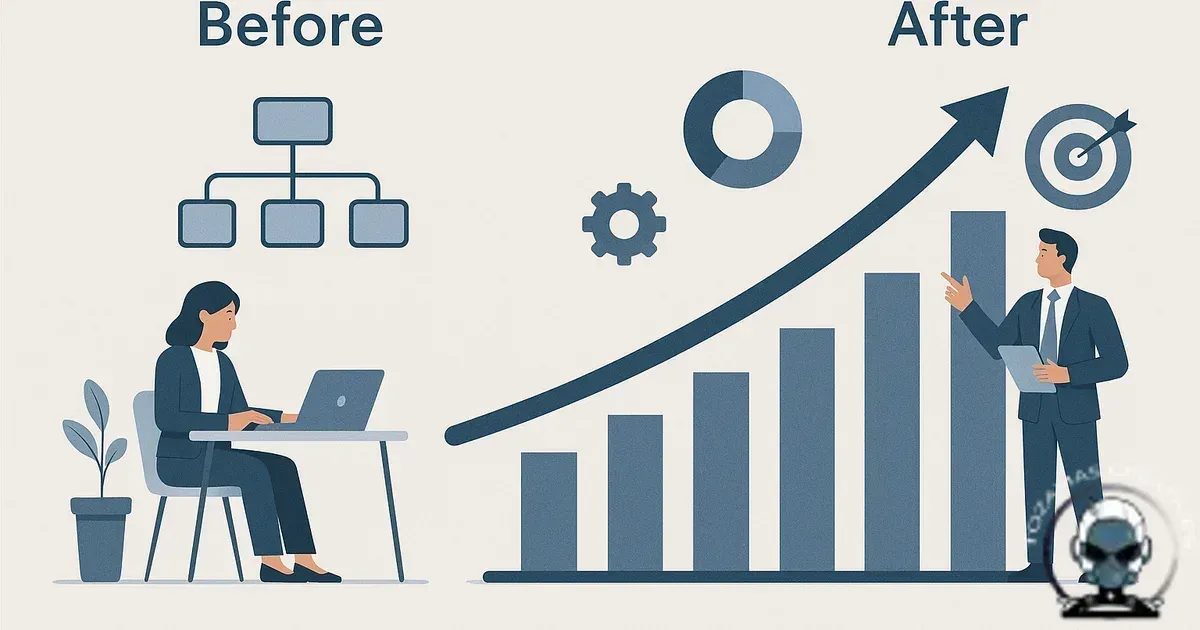
What a growth system actually is and what it isn’t
Growth is the output of a few connected parts
A business growth system is a set of repeatable steps that turns attention into revenue; according to HubSpot, businesses that automate their marketing see a 10% increase in revenue within six to nine months. This system then uses that revenue and the data it creates to sharpen your positioning and improve results. It’s not a “funnel template”, and it’s definitely not a grab bag of tactics that never talk to each other. It’s the difference between:
- running ads and hoping, versus running ads into a site structure that converts and can be measured properly
- publishing content, versus publishing content that builds a service library and gives people a clear next step
- doing a launch, versus building an engine that keeps producing leads after the launch buzz fades
Your website sits at the centre of this. When it’s treated like an asset (not a brochure), it gets stronger over time as you add pages, refine messaging, and tighten conversion pathways. If you want the long version of that argument, read why your website should be your most valuable business asset.
The website’s job changes as you grow (and most sites don’t)
Build the right foundation for the stage you’re in, because what “good” looks at $20k a month is different to what “good” looks like at $200k month. Early on, your website needs to prove clarity and capture intent. Later, it needs to scale structure, measurement, and backend workflows without collapsing into technical debt.
If you want a clean framework for this, The 5 Stages of Business Growth (And Where Your Website Fits In) breaks down what typically breaks at each stage and what your site should do to support discoverability and operational load. The practical takeaway is simple, treat the website as growth infrastructure, not a static project. When your service mix, team size, or lead volume changes, your information architecture, conversion pathways, and data integrity requirements change with it.
And if you’re sitting on an underperforming site because “it’s fine for now”, it’s rarely fine. It’s usually just quietly leaking leads, weakening discoverability signals, and corrupting your measurement. The Cost of Doing Nothing: What an Underperforming Website Really Loses You puts numbers and mechanisms behind the slow bleed, the kind you only notice when the pipeline gets tight.
The missing layer: feedback loops that turn marketing into a system
Growth becomes predictable when your marketing, website, and sales process share the same foundation. That foundation is a feedback loop: you attract the right attention, capture clean intent signals, convert, then feed the outcomes back into your offer, messaging, and channel mix.
Most businesses think they have a “growth system” because they run ads, post content, and have a website. But if those parts don’t connect through measurable handoffs, you don’t have infrastructure, you have activity. The difference is technical integrity, consistent tracking, consistent page purpose, and consistent decision paths so you can see what’s working without arguing with the data.
If you want the formal definition and the common failure modes we see, disconnected tactics, messy measurement, and no iteration rhythm, read What Is a Business Growth System? (And Why Most Businesses Don’t Have One). It’s the clearest way to sanity check whether you’ve built a repeatable engine or just assembled a pile of tools.
In practical terms, a functioning growth loop looks like this:
- Input: traffic from channels that match buyer intent, not vanity reach.
- Processing: landing pages mapped to intent, with proof and clear next steps.
- Output: conversions you can trust, calls, forms, bookings, captured cleanly.
- Learning: lead quality + close reasons fed back into content, offers, and page structure.
This is also where algorithmic alignment starts to matter. AI search systems reward clarity and consistency, not just in content, but in how your business is represented across your site, structured data, and citations. A tight loop gives you the evidence to refine those signals over time, instead of guessing.
From website to growth engine: intent routing, attribution, and technical integrity
A site becomes a growth engine when it can do three things reliably, route intent, attribute outcomes, and improve through feedback loops. That’s the gap between “we have a website” and “our website compounds results”.
Routing intent means different visitors land on different decision paths based on what they’re trying to solve, not everyone gets funnelled into the same generic contact page. Attribution means you can connect the dots between the channel, the page, the conversion, and the eventual revenue without arguing over dashboards. And improvement means you can change the system without breaking it, because the foundation has technical integrity.
For the full model and the practical infrastructure behind it, see From Website to Growth Engine: How Modern Businesses Scale Online. It’s the clearest articulation of why modern growth isn’t about “more traffic”, it’s about building a site that can capture, qualify, and learn.
That same principle shows up in conversion performance. If you’re pushing traffic into pages that don’t map to intent, you’re paying to discover what you could have engineered upfront. Turning Website Visitors Into Leads: The Missing Link in Most Marketing explains what’s missing in most setups, pages designed to convert, CTAs that match decision stage, and tracking that doesn’t lie.
Pre launch foundations: offer clarity, proof, and decision paths
Don’t build the site until the buying journey is mapped
Before a launch, the most expensive mistake is building pages without a decision path. You end up with a polished site that still makes visitors do the hard work, working out what you do, who it’s for, and what they should do next.
At minimum, you need:
- Offer structure: what you sell, how it’s packaged, and what the “entry point” offer is for cautious buyers
- Proof structure: case studies, testimonials, certifications, before/after, and specific outcomes, not vague claims
- Decision structure: clear next steps for different intents. book a call, request a quote, compare options, download a guide
Even in service businesses, buyers don’t all arrive via the homepage. They land on a service page, a location page, a blog post, or an ad landing page. Pre launch planning needs to assume that, and design the journey from each entry point.
Service architecture: the backbone of scalable growth
If your services expand, your site needs to expand cleanly
Growing businesses add services, industries, locations, packages, and partnerships. If your website can’t reflect that growth without becoming a maze, both SEO and conversions take a hit. The fix is service architecture, a hierarchy built to scale without constant rework.
Practically, that means:
- a consistent parent/child structure for services and sub services where needed
- landing pages built for specific intent, not “everything pages” that try to cover the entire business
- internal linking that helps both users and search engines understand what matters most
- templates and page rules so new pages don’t become one off snowflakes
We’ve laid out the approach in detail in building a website that scales with your business: service architecture and landing page growth. It’s the single most common thing we rebuild when a business has outgrown its first website.
Platform and scalability: choose foundations you won’t outgrow
Most “platform debates” are really scalability debates. The question isn’t what’s popular, it’s what lets you evolve your service architecture, publish at depth, integrate cleanly with your CRM, and maintain performance without fragile workarounds.
If you choose a platform that caps your content modelling, locks you into heavy plugins, or makes tracking brittle, you don’t just create inconvenience, you create a ceiling on discoverability and iteration speed. That ceiling shows up right when growth starts demanding more landing pages, more segmentation, and more measurement.
Choosing the Right Website Platform for Long Term Growth lays out the practical criteria we use, maintainability, integration pathways, performance control, and the ability to scale information architecture without rebuilding every year. If you’re expanding and want a blueprint for scalable structure and CMS modelling, Building a Website That Scales With Your Business is the companion piece, it connects architecture decisions to long term discoverability and operational sanity.
Custom vs template builds: choose the foundation you can actually evolve
Pick the right build approach and you reduce rebuild risk later. That’s the real decision: not “custom vs template” as a style preference, but as a growth infrastructure choice.
A template build can be a solid starting point when your offer is tight, your service architecture is simple, and you’re not planning to ship new landing pages, integrations, or conversion experiments every month. The upside is speed and lower upfront cost. The downside is usually hidden in the constraints, rigid page templates, plugin dependence, and limited control over performance, structured data, and tracking logic. Those constraints don’t hurt on day one. They hurt when you try to scale.
A custom build tends to make sense when change is part of the business model, multiple services, multiple audiences, location expansion, or a strong content library strategy where internal linking, schema, and page intent need to be engineered. Custom doesn’t mean “fancy”. It means you can model your site around intent routing, algorithmic alignment, and technical integrity without fighting the theme every time you add a new page type.
If you want a practical decision lens, based on scalability, discoverability, and how much change your business will demand, read Custom vs Template Websites: What’s Right for Your Business?. It’s the clearest way to avoid the common trap, saving money upfront, then paying for workarounds, performance fixes, and structural rework once growth starts applying pressure.
Website structure that produces leads not just traffic
Structure is what turns interest into action
Lead generation improves when people can move through your site without friction. That should be obvious, yet most sites accidentally create friction through messy navigation, unclear page purpose, and content that ends in a dead end.
Strong structure usually includes:
- clear hierarchy: the most important pages are easiest to reach and most linked internally
- trust flow: proof placed where doubt typically appears, pricing pages, quote forms, “about” sections, comparison moments
- conversion pathways: each page has a primary action and a sensible secondary action
- intent matching: pages built for “ready to buy” searches aren’t stuffed with early stage education, and vice versa
For a deeper breakdown of how hierarchy and pathways affect conversions, see how proper website structure improves lead generation.
Conversion pathways are engineered, not hoped for
Lead generation isn’t a traffic problem as often as people think. It’s a pathway problem. If the site doesn’t give each intent a clear next step, with proof placed where doubt occurs, visitors don’t “bounce”. They just postpone the decision and buy from someone else.
The fix is conversion infrastructure, consistent CTAs, page level intent matching, and a measurable journey from entry point to enquiry. Conversion Pathways: How to Turn Traffic Into Customers breaks down how to build those pathways so they’re clear to humans and legible to machines, which matters for algorithmic alignment in AI search environments.
If you want the diagnostic lens, what’s typically missing when marketing looks busy but enquiries stay flat, Turning Website Visitors Into Leads: The Missing Link in Most Marketing maps the common failure points, weak intent mapping, unclear offers, and measurement gaps that hide where the drop off actually happens.
Diagnose before you optimise: find the real constraint (not the loudest opinion)
Optimisation only works when you’re fixing the actual bottleneck. Otherwise you’re just rearranging buttons and calling it strategy.
The practical approach is to diagnose in layers, from intent to behaviour to technical integrity:
- Intent mapping: what is each key page for, and what intent is it meant to capture, ready to buy, comparison, reassurance, research? If a page is trying to serve three intents, it usually converts for none.
- Pathway analysis: where do people enter, what do they do next, and where do they stall? This is how you separate “low traffic” from “traffic that can’t find a next step”.
- Funnel and form friction: dead end pages, unclear CTAs, trust gaps, form errors, mobile layout issues, slow load times. These are conversion killers disguised as “minor UX”.
- Measurement validity: if events are double counting, misfiring, or missing key actions, your optimisation backlog will be built on noise.
- Technical integrity checks: performance, accessibility, template consistency, and CMS constraints. If the foundation is brittle, every “small change” becomes risky and expensive.
If you want a structured framework to pinpoint what’s actually holding your site back, using measurement, intent mapping, funnel analysis, and technical integrity, start with How to Identify What’s Holding Your Website Back. It’s the difference between improvement and guesswork.
Once the constraint is clear, you can optimise with purpose: the right page, the right pathway, the right proof, and changes you can measure.
Measurement before launch: tracking you can trust
If you can’t measure it, you can’t improve it
Plenty of businesses launch with “some tracking” and then waste months arguing with their own numbers. The basics aren’t complicated, but they do need to be intentional.
- Define conversions: calls, forms, bookings, purchases, quote requests, email sign-ups. Pick what matters.
- Clean event setup: avoid double counting and mystery conversions.
- Attribution expectations: know what you can and can’t learn from each channel.
- Baseline reporting: capture pre launch benchmarks so you can tell what changed.
If you’re building for AI driven search visibility as well, structured data is quickly becoming non negotiable. This is worth reading when you’re setting foundations, why structured data is becoming critical in AI driven search.
Metrics that matter: measure outcomes, not noise
Traffic is not a business outcome. It’s an input. If your reporting can’t answer “which pages and channels produce qualified leads and revenue”, you don’t have measurement, you have numbers.
This is where data integrity stops being a technical nice to have and becomes a growth requirement. Clean conversion definitions, consistent event logic, and lead quality feedback from sales are what turn analytics into decision infrastructure.
Why Most Businesses Don’t Track the Right Website Metrics covers the practical shift, tracking what the business needs, enquiries, bookings, qualified leads, close reasons, not what dashboards default to. When you align metrics to real outcomes, optimisation becomes systematic instead of argumentative.
Turn analytics into decision infrastructure: from data collection to growth insights
Most websites don’t have a data problem. They have a decision problem.
You can collect plenty of metrics and still be blind to what drives revenue if your measurement layer isn’t designed around intent and outcomes. The goal is simple: turn behaviour into signals you can act on, without corrupting the feedback loop.
What this looks like in a clean growth system:
- Intent based events: track actions that represent decision movement, service page depth, pricing interactions, quote starts, booking steps, not just “page views”.
- Segmentation that matches reality: separate branded vs non branded, new vs returning, high intent landing pages vs educational content, and paid vs organic pathways. Otherwise you average away the truth.
- CRM linked outcomes: pipeline stage, lead quality, and close reasons should feed back into what you publish and what you promote. If sales says “wrong fit”, that’s a content and routing problem, not a sales problem.
- Attribution with integrity: you don’t need perfection, but you do need consistency. When tracking drifts, teams start optimising for the dashboard instead of the business.
If you want the practical method for converting website data into actions, clean tracking, smart segmentation, and CRM-linked outcomes, read How to Turn Website Data Into Actionable Growth Insights. It’s built for business owners who need clarity, not another reporting spreadsheet.
In a post search world, this also supports algorithmic alignment. When you know which pages generate qualified outcomes, you can strengthen those pages, reinforce entity signals, and build content that earns citations because it’s demonstrably useful.
Technical debt: the hidden cost that shows up after launch
Fast builds often become slow businesses
Technical debt is what you inherit when corners are cut in build quality, plugins, theme customisations, or content structure. It doesn’t always bite straight away. It shows up later as slow performance, fragile updates, SEO stagnation, and that familiar line, “we can’t change that without breaking something”.
Common sources we see in the wild:
- page builders stacked on page builders
- too many plugins doing overlapping jobs
- no consistent component system for layouts
- hard coded sections that make simple edits expensive
- poor image and script handling that drags speed down
If you want a clear explanation of what it is and why it blocks growth, read what is technical debt in websites (and why it slows growth)?. It’s one of the main reasons “small changes” turn into big invoices later.
Performance is revenue infrastructure (speed isn’t cosmetic)
Speed is not a developer flex. It’s conversion infrastructure. Slow pages increase drop off, reduce paid media efficiency, and weaken discoverability signals, especially on mobile, where most service business browsing happens.
More importantly, performance problems are rarely isolated. They’re often symptoms of deeper technical debt, bloated plugins, heavy themes, unoptimised media, and no performance budget. Fixing speed properly means protecting the foundation so every future landing page and campaign doesn’t inherit the same drag.
Why Website Performance (Speed) Directly Impacts Revenue breaks down the commercial mechanics, how speed affects conversion rates, lead quality, and the cost of acquiring a customer across channels.
Backend systems: the hidden layer that keeps growth clean
High performing sites don’t just look coherent on the front end, they behave coherently behind the scenes. That means integrations that don’t drop data, forms that feed the right fields, event tracking that matches reality, and workflows that reduce manual admin.
The Hidden Layer of High Performing Websites: Backend Systems explains what’s actually doing the heavy lifting, CRM integration, tagging, automation triggers, and the technical plumbing that keeps your growth loop measurable.
When you treat the website as infrastructure, you can automate parts of the business without turning everything into a brittle Zapier maze. How to Build a Website That Automates Your Business walks through the practical approach, clean data capture, event driven workflows, and integration patterns that preserve technical integrity as you scale.
Security and maintenance: protect uptime, trust, and data integrity after launch
Keep the site live, clean, and trustworthy and you protect revenue. That’s the operational reality, security and maintenance aren’t “IT chores”, they’re part of your growth system’s foundation.
When maintenance is ignored, the failure modes are predictable, plugin and theme vulnerabilities, broken forms, tracking drift, slowdowns from bloated updates, and the worst kind of issue, silent data corruption. That last one is brutal because it poisons your feedback loops. If your conversion tracking misfires, your attribution becomes guesswork, and your optimisation cadence turns into opinion fights.
Security also ties directly to discoverability and conversion. Downtime, hacked pages, spam injections, or browser warnings don’t just look bad, they break trust signals for humans and machines. In a post search environment where citations and entity confidence matter, technical integrity isn’t optional. It’s how you stay referenceable.
Practically, “maintenance” should include, monitored uptime, backups you’ve actually tested, update management with rollback plans, performance checks, form and CRM integration audits, and periodic tracking validation so your reporting stays aligned with reality. If you want a grounded checklist of what to maintain, and why it affects growth outcomes, read Website Security and Maintenance: The Overlooked Growth Factor.
Launching without plateauing: what to do in the first 90 days
Launch is the start of optimisation, not the finish line
Lots of websites get a burst of attention at launch, then go quiet. Not because demand vanished, but because the site wasn’t built for iteration. The first 90 days is where you build momentum by tightening what’s already there.
- Fix the obvious friction: form errors, confusing CTAs, mobile layout issues, slow pages.
- Build landing pages: create pages for high intent services, industries, and campaign angles.
- Improve internal linking: connect related services and supporting content so authority flows.
- Review conversion quality: not just lead volume, but whether leads are the right fit.
This pattern is so common we wrote it up specifically: why most websites plateau after launch (and how to fix it).
The post launch growth phase: build an iteration loop, not a maintenance list
After launch, your job is to turn the site into a learning system. That means tightening conversion pathways, expanding high intent landing pages, improving internal linking, and tuning performance based on real user behaviour, not internal opinions.
What Happens After Your Website Launch? The Post-Launch Growth Phase lays out what this looks like in practice, measurement, discoverability improvements, performance tuning, and an iteration cadence that compounds.
The key mindset shift is that optimisation is a loop with inputs and outputs. If you treat it as a one-off “polish”, you’ll plateau. Website Optimisation Is Not a One Time Task: Build a Continuous Improvement Loop covers the structure: what to test, how to prioritise, and how to keep technical integrity intact while you iterate.
Conversion optimisation that compounds: fix friction, then prove it with controlled tests
Conversion rate optimisation (CRO) isn’t a design exercise. It’s infrastructure work, remove friction at the constraint, protect technical integrity, then measure the outcome cleanly.
The highest leverage CRO changes are usually unglamorous:
- Message match: align ads, headlines, and above the-fold copy so visitors immediately know they’re in the right place.
- Proof placement: put case studies, testimonials, and specifics where doubt spikes, pricing, comparisons, before a form submit, not buried on a “reviews” page.
- CTA clarity: one primary action per intent, with a sensible secondary action for cautious buyers.
- Form and booking hygiene: reduce fields, explain what happens next, and remove technical errors that quietly kill enquiries.
- Speed and mobile usability: performance is conversion infrastructure. If the page is slow or fiddly on mobile, your funnel leaks before persuasion even starts.
For a grounded view of the kinds of changes that actually move conversion rates, and why they work, see Conversion Rate Optimisation: Small Changes That Drive Big Results.
Once you’ve identified a meaningful constraint, A/B testing becomes the proof layer. It’s not there to validate personal preferences, it’s there to validate decisions without polluting your data.
What to test (and what to avoid):
- Test high impact elements: headline and offer framing, CTA wording, proof blocks, page layout around the decision moment, and form flow.
- Avoid low value experiments: button colours, random hero images, or anything that doesn’t change the decision logic.
- Protect data integrity: stable tracking, enough volume, one variable at a time where possible, and clear success metrics tied to qualified enquiries, not just clicks.
If you want a practical guide written for business owners, not statisticians, on where A/B testing matters and how to avoid noisy results, read A/B Testing for Business Owners: What to Test and Why.
The system first takeaway, CRO is how you compound returns on every channel. When the foundation is sound, each improvement increases the value of your traffic, your content library, and your paid spend without needing more inputs.
When to rebuild versus improve: making the call without guesswork
Some sites need iteration. Others need surgery.
Rebuilds are disruptive, so you don’t do them on a whim. But trying to patch a site with structural problems can end up costing more than starting again with a clean foundation.
Rebuild signals we take seriously:
- rankings and traffic trending down despite content and campaign effort
- mobile UX problems that are hard to fix without reworking templates
- speed issues that persist after optimisation attempts
- editing is painful or risky, so the site stops evolving
- tracking and measurement are unreliable, so decisions are based on vibes
If you’re weighing this up, use how to know when it’s time to rebuild your website as a checklist. It helps separate “needs maintenance” from “needs a new foundation”.
SEO and visibility systems after launch: content that builds a library
Publish with structure, not randomness
Post launch SEO works best when content is planned around your service architecture. Done properly, every new piece supports a commercial page, answers a real buyer question, and strengthens internal linking rather than scattering authority.
Two practical considerations that are changing quickly:
- AI search behaviour: search engines are answering more questions directly, which changes how traffic arrives and what “success” looks like.
- Entity and structured data: the way your business is understood matters more than exact match keywords.
For a realistic view of what’s happening to clicks and visibility, read how AI search results are changing website traffic. If your team is anxious that AI will make SEO pointless, this one is grounded, will AI replace SEO? the real answer businesses need.
Owning attention: email and remarketing as growth infrastructure
Traffic is rented. Lists are owned.
After launch, one of the smartest systems you can build is an owned audience. Email is still the simplest way to keep momentum between campaigns, nurture leads who aren’t ready yet, and reduce dependence on ad platforms.
What works in practice:
- one strong lead magnet that matches your core service, not a generic “newsletter”
- short automated sequences that answer the same objections you hear on sales calls
- segmentation by intent so you’re not blasting everyone with the same message
This is the mindset shift: email as infrastructure: why owning attention beats renting it.
Distribution systems that don’t rely on luck
Pick channels that match your buyers and your capacity
Not every business needs to be everywhere. You need a small set of channels you can run consistently, where the format suits your offer and the audience is already in research mode. A few options that work well for service businesses:
- YouTube when your service needs explanation and trust. Start with the questions you answer weekly. YouTube is a search engine: why video content compounds authority.
- Quora when buyers ask detailed comparison questions before contacting suppliers. Quora and intent based visibility: meeting buyers at the question stage.
- Reddit and forums when trust is built through candid, experience-based answers. It’s slow, but it sticks. community driven visibility: how Reddit and forums build trust at scale.
- Pinterest when you have visual proof, repeatable tips, or evergreen assets that can circulate for months. Pinterest for business: the evergreen traffic channel most brands ignore.
- Medium syndication when you already write and want extra reach without reinventing content. Medium and content syndication: extending the lifespan of your ideas.
The goal isn’t “more content”. It’s more touchpoints around the same core ideas, tied back to specific landing pages that convert.
Traffic systems: build a measurable flow across paid, organic, and retention
Traffic that feeds growth isn’t random. It’s engineered, capture demand, create demand, and retain attention, all tied back to pages that convert and measurement you can trust.
How to Build a Traffic System That Feeds Your Website maps the system, which channels do acquisition, which assets do conversion, and which loops do retention. The point is to stop treating channels as separate hobbies and start treating them as connected infrastructure.
The paid vs organic debate is usually a false binary. Paid traffic is useful for proving what converts quickly. Organic compounds when your foundation, site structure, content depth, internal linking, and tracking, is solid. Organic vs Paid Traffic: What Growing Businesses Should Focus On shows how to run both without compromising data integrity or wasting budget.
And if your entire pipeline depends on social platforms behaving nicely, you don’t have a growth system, you have a platform dependency. Why Social Media Alone Will Not Grow Your Business explains the practical risk, social is a distribution layer, not growth infrastructure. Your website, email list, and measurement layer are what you actually own.
Repurposing systems: turning one asset into many
Consistency is easier when you stop starting from scratch
If you’re already writing useful content, you can turn it into audio and video without reworking the same ideas ten different ways. Repurposing works when you keep the original structure, then adapt the format around it.
A simple workflow:
- write one strong piece aimed at a buyer question
- record a short voice version, even a phone mic is fine to start
- edit into a podcast episode and a few short clips
- link it back to the relevant service and landing pages
This is a practical guide to doing it without making it a production nightmare: from blog to podcast: turning written content into audio authority.
Visibility in AI search: build authority signals, not just rankings
Search is shifting from “ten blue links” to answer engines that summarise, cite, and recommend. If your growth system relies on a handful of keyword rankings, you’re exposed. The goal now is to become the most quotable, referenceable source in your category, across your site, your brand footprint, and the wider web.
Practically, that means tightening up the signals that help machines and humans trust you:
- Entity consistency: keep your business name, services, location cues, and key people consistent across your website, profiles, and citations. Inconsistent details dilute trust and can prevent you being “understood” as the same entity.
- Structured data that matches reality: use schema to reinforce what you do, where you operate, and what content represents, services, FAQs, reviews, organisation details. It won’t fix a weak offer, but it does reduce ambiguity.
- Content ecosystems: publish clusters that cover a topic end to end, definitions, comparisons, process, costs, pitfalls, case studies. AI systems pull from comprehensive libraries more readily than one off posts.
- Earned citations and proof: case studies, partnerships, industry mentions, and original insights increase the chance your content is referenced rather than rewritten from generic sources.
If you want a practical breakdown of what to prioritise, authority signals, entity clarity, structured data, and how to build a content library that gets cited, see How Businesses Can Stay Visible in the Age of AI Search.
In system terms, treat AI visibility as an outcome of the fundamentals, consistent entity signals, a website that clearly expresses your expertise, and content designed to be referenced. That’s a more durable asset than chasing whatever the algorithm rewarded last quarter.
AI changes the job of your website: from pages to machine-readable growth infrastructure
Modern websites aren’t just for humans anymore. They’re also for machines that summarise, recommend, and cite sources. That shift changes the job of your site from “publish pages and hope they get found” to building infrastructure that can be parsed cleanly, connected logically, and trusted at scale.
In practical terms, AI search systems don’t reward noise. They reward clarity, consistent entity signals, tight topical coverage, and content that maps to real buyer intent. If your service pages, proof, and supporting content aren’t connected in a way a machine can follow, you don’t just lose discoverability, you lose citations, and you weaken the feedback loop that tells you what’s actually driving revenue.
The fix isn’t to chase new tactics. It’s to upgrade the foundation, semantic structure, content designed to be referenced, and data layers that reinforce what’s true. We’ve unpacked the strategic shift and the practical response in How AI Is Changing Website Strategy (And What to Do About It). It’s a system first lens for business owners who want algorithmic alignment without turning their website into a science project.
Think of it this way, if your site can’t be understood reliably, it can’t be recommended reliably. And in a post-search world, that’s not a marketing problem, it’s a technical integrity problem.
Content that earns citations: depth beats volume in AI search
In a post search world, content isn’t just there to attract clicks. It’s there to be referenced. AI systems summarise and cite sources they can understand and trust, which means your content needs structure, clarity, and coverage, not endless thin posts.
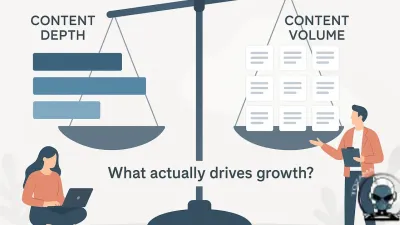
Content Depth vs Content Volume: What Actually Drives Growth? makes the case for authority building libraries, fewer, stronger assets that answer the full question, link to the right commercial pages, and reinforce entity signals. That’s how you improve discoverability without chasing the content treadmill.
This is also where page design becomes part of algorithmic alignment. Machines don’t “feel” your brand, they parse structure, relationships, and consistency. Designing a Website Ecosystem (Not Just Pages): Infrastructure for Discoverability explains how to connect services, proof, and pathways so both users and AI systems can navigate your expertise and cite it with confidence.
Build AI ready foundations: semantic structure, connected content, and structured data that matches reality
“AI ready” isn’t a badge you add after launch. It’s a build standard, your information architecture, content model, and structured data need to work together so both humans and machines can navigate your expertise without ambiguity.
At a foundation level, AI ready websites tend to share a few engineered traits:
- Semantic structure: page templates that use consistent heading hierarchy, clear section purpose, and predictable content components. This improves usability for humans and machine readability for citation systems.
- Connected content: service pages linked to proof, FAQs, comparisons, and process content in a way that reflects how buyers decide. Internal linking isn’t decoration, it’s discoverability infrastructure.
- Structured data with technical integrity: schema that reinforces your entity, services, locations, and content types, and stays aligned with what the page actually says. Mismatched markup is how you create confusion at scale.
Done properly, this gives you algorithmic alignment without compromising conversion. Your commercial pages become easier to understand, your supporting content becomes easier to reference, and your measurement layer becomes more reliable because page intent is clearer.
For a practical framework you can apply to new builds or rebuilds, see Building AI Ready Websites: Structure, Content, and Data. It’s the blueprint for turning “we need to be visible in AI search” into actual infrastructure, structure, content relationships, and data you can trust.
The takeaway, AI discoverability isn’t a copywriting trick. It’s the outcome of a well built foundation that makes your business legible, referenceable, and consistent across every touchpoint.
Local discovery that converts: make Google Business Profile and your website work as one system
For many service businesses, Google Business Profile (GBP) is the first touchpoint but it shouldn’t be the last. GBP is a discovery layer. Your website is where trust is built, objections are handled, and enquiries are generated with intent.
A common failure mode is treating GBP as the strategy, a few photos, some posts, and then hoping calls roll in. That can work in low competition markets, but it’s fragile. You don’t control the platform, the layout changes, and your competitors sit one swipe away.
Instead, build a joined up local growth system:
- Message match: ensure your primary services, service areas, and positioning are identical between GBP and your key landing pages. If the promise changes between the listing and the site, conversions drop.
- Location/service pages that do a job: don’t just list suburbs, explain your process, show proof, answer pricing questions where appropriate, and make the next step obvious.
- Review strategy with on site reinforcement: reviews live on GBP, but your site should echo the same proof, testimonials, case studies, before/after, accreditations, so the user doesn’t have to “go back to Google” to verify you.
- Tracking that connects the dots: use UTM links from GBP to key pages and track calls/forms properly so you know what actually drives revenue, not just impressions.
For the deeper argument and the practical integration points, read Why Google Business Profiles Alone Are Not Enough. The takeaway, GBP helps you get found; the website helps you get chosen.
Budget builds and hidden costs: prevent the ‘cheap site’ trap from derailing growth
Growth systems break when the underlying platform can’t support them. The most common cause isn’t marketing, it’s a website that looked “done” at launch but was built with shortcuts that create technical debt.
The cheapest quote often wins on the wrong assumptions, that all websites are broadly the same, that you can “fix it later”, and that speed to launch matters more than build quality. In reality, bargain builds tend to surface problems right when the business needs momentum, slow performance, brittle templates, plugin conflicts, messy tracking, poor information architecture, and a backend no one wants to touch.
To keep your growth system intact, treat the website as infrastructure:
- Build for change: can you add new service pages, landing pages, lead magnets, and tracking without breaking layouts or relying on a developer for every small update?
- Performance and accessibility: speed and usability aren’t “nice to have”, they affect conversion rates, SEO, and paid media efficiency.
- Clean foundations for measurement: if events, forms, and call tracking are bolted on later, you end up with unreliable data and poor decisions.
- Security and maintainability: cheap builds often become expensive through ongoing patchwork, emergency fixes, and eventual rebuilds.
If you’re weighing quotes or trying to understand why a low cost build can become a long term liability, see Why the Cheapest Website Quote Often Becomes the Most Expensive. It’s the practical lens for spotting hidden costs before they show up as lost leads and a forced rebuild.
Sources & Further Reading

Build a growth system that won’t fall over
If you want a site and tracking setup that can scale, we’ll map the gaps and the quickest fixes.
Get in TouchComments
No comments yet. Be the first to join the conversation!



































Leave a Comment
Your email address will not be published. Required fields are marked *