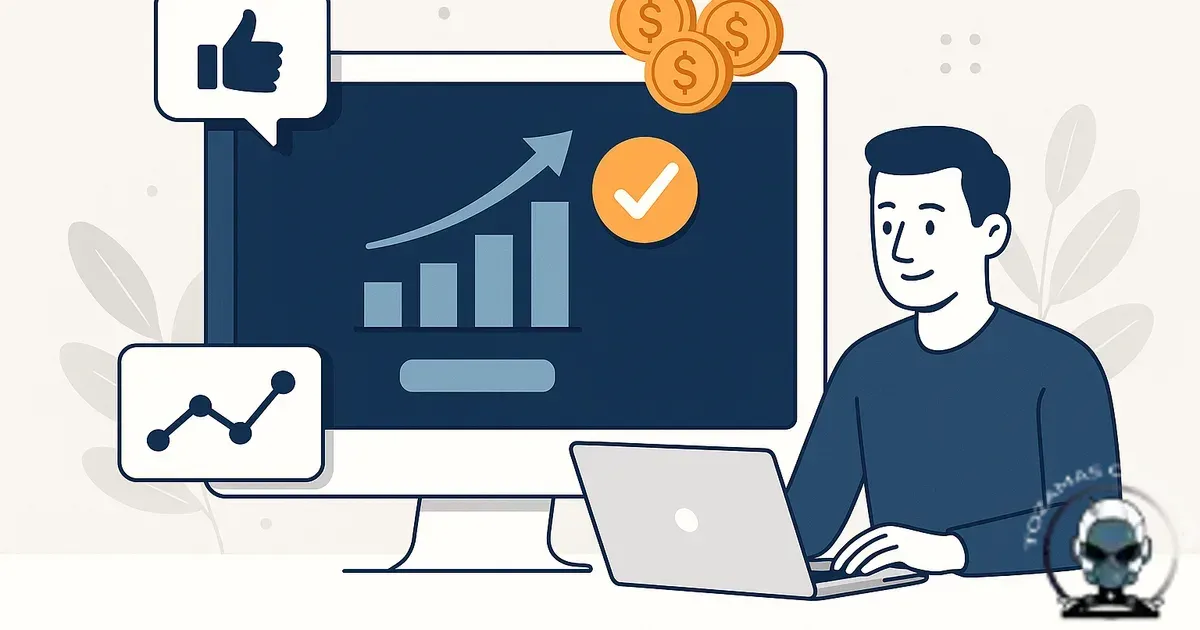
Conversion rate optimisation is how you turn small, deliberate improvements into outsized gains, because you’re strengthening the parts of your digital foundation that convert intent into action, rather than pouring more traffic into the same leaks.
Why “small changes” work when they’re applied to the right constraint
Most low conversion rates aren’t caused by one catastrophic failure. They’re usually the result of friction stacked across the journey, a vague headline, a slow template, one field too many, a credibility gap right at the decision point. None of those looks dramatic on its own. Together, they quietly drain momentum until performance plateaus.
Good CRO is constraint hunting. In fact, according to recent studies, businesses that implement structured conversion rate optimisation strategies can see conversion improvements of up to 30%. You identify the step that caps throughput, then remove friction without compromising technical integrity. That’s why incremental work wins. It’s not cosmetic tinkering. It’s algorithmic alignment between what a user is trying to achieve and what the interface is forcing them to do.
Start with the measurement layer, or you’ll optimise the wrong thing
Better decisions come from reliable instrumentation, because if you can’t trust your data you can’t trust your conclusions. Before changing anything, confirm your event tracking captures the actions that matter, with clean definitions and consistent naming. We regularly see “conversions” counted on button clicks that never become successful submissions, or duplicate events firing in single page apps. That kind of noise makes real improvements look like randomness.
Clear prioritisation comes from separating signal, because micro conversions, scroll depth, video plays, add-to-cart, are not the same as macro conversions, lead submitted, booking completed, purchase. Then segment by device, channel, and landing page template. CRO decisions made on blended averages are how businesses “improve” a desktop flow while mobile quietly burns.
If you want a practical way to structure this, the thinking in a business growth system applies directly. CRO is a feedback loop, not a one off project.
High leverage changes that usually move the needle
1) Match the offer to the intent, then make it obvious
The quickest lifts usually come from message alignment, because relevance beats reinvention. If the ad promises “same week appointments” but the landing page opens with company history, you’ve created a credibility and relevance gap. Tighten the first screen so it answers three things immediately, who it’s for, what outcome they get, and what to do next.
Cleaner decisions come from a single primary action, because competing CTAs force choices before the user has enough context. If you genuinely need multiple actions, treat one as primary and demote the rest visually and semantically.
2) Reduce form friction without destroying lead quality
Higher completion rates come from lowering perceived effort, because “shorter forms convert better” is often true but not the whole story. The real lever is perceived effort versus perceived value. If you need more fields to qualify leads, earn them through sequencing. Start with the minimum required to begin the relationship, then progressively collect detail after the first commitment.
More submissions without lower intent come from removing pointless work, because two changes consistently help, remove optional fields that look mandatory, and move non essential fields behind conditional logic. For example, only ask “preferred contact time” after someone chooses phone as their contact method. That’s friction removed without weakening lead quality.
3) Fix the decision point proof, not the whole page
More confident clicks come from proof placed where risk is highest, because testimonials sprinkled randomly are just decoration. Proof needs to sit at the decision point. If your CTA is “Book a consult”, the proof should address the risk, results, reliability, and what the experience is like. Put a tight testimonial block or short case snippet adjacent to the CTA, not six scrolls below.
Stronger credibility comes from specificity, because “Great service” is social noise. “Cut our quoting time from 2 days to 2 hours” is evidence. Specificity is a discoverability asset too, because it creates clearer citations for both humans and machines.
4) Improve speed where it affects interaction, not just the score
Higher conversion rates come from reducing interaction delay, because site speed isn’t a vanity metric, it’s conversion friction. The pages that matter most are your high intent landing pages, product pages, and checkout or booking flows. Focus on what blocks action, hero images that delay rendering, third party scripts that stall the main thread, and layout shifts that cause mis clicks.
Better user flow comes from practical performance work, because Core Web Vitals are a useful north star but the goal is simple, the page should feel immediate when someone tries to act. If you chase this properly, you’ll improve technical integrity across the stack, not just compress a few images.
5) Make the CTA behaviour match the promise
More completions come from keeping the contract, because if a button says “Get a quote” and then opens a generic contact form, you’ve introduced doubt right when you need commitment. Micro mismatches like this are conversion killers.
Higher trust comes from literal alignment, because the action should match the label. “Get a quote” should lead to a quote flow. “Book a call” should show available times. “Download” should download, not get gated behind an unexpected extra step. This is unglamorous work. It’s also where the money tends to hide.
Don’t overcomplicate testing. Do make it disciplined.
Better outcomes come from clean experiments, because small business CRO fails when testing becomes theatre. Someone changes three things at once, calls it a test, then declares victory off a week of data. That’s not optimisation. That’s vibes with screenshots.
Clear learnings come from tight scope, because you need to attribute impact to a specific change. Use a clear hypothesis tied to a real friction point. Run it long enough to cover weekday and weekend behaviour if your sales cycle varies. If you’re unsure what to test first, A/B testing for business owners is a solid framework for choosing high leverage experiments and avoiding false positives.
The CRO work most businesses ignore: cleaning up the “invisible” friction
Higher returns often come from boring fixes, because some of the best improvements don’t look like marketing, they look like engineering hygiene.
More accurate decisions come from clean attribution, because broken or inconsistent tracking parameters create confusion that leads to bad budget calls. Stronger discoverability comes from reducing internal conflict, because duplicate content across service pages creates internal competition and muddies citations. Better machine interpretation comes from correct canonical configuration, because misconfigured canonical tags can send systems to the wrong page to cite. Fewer drop offs come from accessible UX, because pop ups that trap focus or fail on mobile create accessibility issues that quietly reduce conversions and increase support overhead.
Faster wins come from auditing near the conversion path, because when we audit a site we usually find a handful of these issues sitting right next to the steps that matter. They don’t show up in a brand workshop. They show up in your numbers. If you need a structured way to spot them, how to identify what’s holding your website back maps the common constraints we see in real builds.
How incremental CRO becomes compounding growth
Compounding growth comes from stacked lifts, because improvements multiply across the funnel. A 10% lift on the landing page, a 10% lift on form completion, and a 10% lift on show up rate doesn’t add up to 30%, it compounds. That’s how small changes produce genuinely big results without development on a new platform or a full redesign.
Predictable performance comes from improving the foundation, because the discipline is choosing changes that strengthen the system, clearer intent matching, less friction, better proof, faster interaction, and cleaner measurement. Do that consistently and your conversion rate stops being a mystery metric and starts behaving like something you can engineer.
Sources & Further Reading

Need a CRO plan that’s actually measurable?
We’ll audit your funnel, fix the friction, and build a testing loop you can trust.
Get in TouchComments
No comments yet. Be the first to join the conversation!


Leave a Comment
Your email address will not be published. Required fields are marked *