
Structure is what turns traffic into enquiries
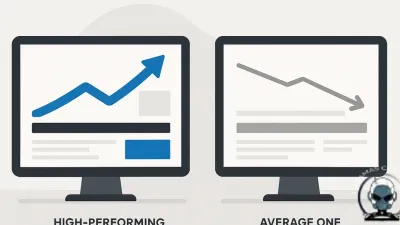
Proper website structure improves lead generation because it governs three things that decide whether someone converts: what they notice first (hierarchy), what convinces them (trust flow), and what they do next (conversion pathways). Understanding proper website structure improves lead generation matters for any business serious about their online presence. Get the structure wrong and you can have solid traffic with barely any enquiries, simply because people can’t find the proof, the offer, or the next step quickly enough.
Most small business sites don’t lose leads because the design is “ugly”. They lose them because the pages are organised like an internal folder system, not the way a buyer actually makes a decision. Tighten the structure and you’ll often see enquiries rise without spending an extra dollar on ads, because more of the right visitors reach the right page with the right context.
Content hierarchy: controlling attention and intent
Hierarchy isn’t just headings and font sizes. It’s the sequence of information and how you group related ideas so intent sharpens as the user moves through the site. On lead gen sites that consistently perform, hierarchy does two things: it helps people self qualify, and it stops them drifting.
On any given page, the hierarchy needs to answer three questions fast: “Is this for me?”, “Do I trust these people?”, and “What do I do now?” If the first screen is all brand fluff and vague claims, people start hunting for substance. If it doesn’t show up within a few seconds, they bounce back to Google and try the next provider.
Across the whole site, hierarchy is the difference between a single “Services” dumping ground and service hubs that reflect how people search, compare, and choose. A pattern we see constantly: a business offers five distinct services, crams them into one page, then wonders why enquiries are vague, low quality, or purely price-driven. Separate pages let you match a specific problem to a specific outcome with a specific call-to-action. That’s how you lift conversion rate without chasing more traffic.
Service architecture that supports real buying journeys
Most buyers don’t start on your homepage. They arrive on a service page, a location page, a comparison page, or a blog post. Your structure has to assume any of those pages might be the first impression.
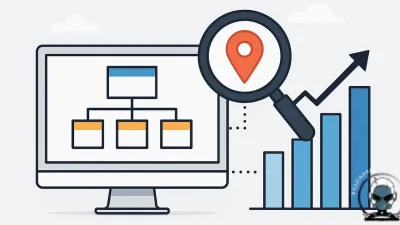
A practical way to build for that reality is to treat each core service as its own entry point. That service page becomes the hub, supported by subpages for common variants, industries, use cases, or FAQs. Done well, it also makes internal linking feel natural (and genuinely helpful), which matters for both SEO and user flow. If you want a deeper look at how this plays out in search authority, structured content silos are one of the cleanest ways to keep topical relevance tight without bloating your navigation.
Trust flow: placing proof where doubt appears
Trust isn’t built by slapping a testimonial slider on every page. Trust flow is about timing: putting the right proof in front of someone at the exact moment they start to hesitate. People don’t read websites like brochures. They scan until they hit uncertainty, then they look for reassurance. Your structure determines whether that reassurance is right there, or buried three clicks away.
In lead generation, the usual hesitation points are: “Can they handle my situation?”, “Are they legit?”, “Is this going to be painful?”, and “Is the price going to blow out?” You don’t need to answer everything up front, but your structure should surface the right proof at the right moment.
On a service page, that means service-specific proof, not generic praise about the business. Case studies, before-and-after examples, a short process overview, and clear scope boundaries carry more weight than broad claims. And if you have compliance constraints, licensing, insurances, or warranty details, don’t hide them in the footer, keep them close to the decision point.
Navigation as a trust signal
Navigation sounds like a usability detail, but it’s also a credibility signal. When users can’t predict where information lives, they assume the business is disorganised. It’s unfair, but it’s how people judge competence online. A clean structure quietly tells them you’ve done this before.
Overloaded menus are a common offender. When everything is in the top nav, nothing feels important, and high-intent pages get buried. A better approach is a tight primary navigation (core services, about, results/proof, insights, contact) and then use contextual links on the relevant pages for the secondary detail. That keeps friction low for decision-makers while still giving depth to people who want it.
Conversion pathways: designing the next click
A conversion pathway is the planned sequence from entry page to enquiry. On most small business sites, the “pathway” is accidental: someone lands on a page, reads a bit, and the only real option is “Contact” in the header. That’s not a pathway, it’s a dead end with a signpost.
Good structure offers different next steps depending on readiness. Someone early in the journey might want a pricing guide, a checklist, or a gallery of recent work. Someone ready to act might want a short form, a booking link, or a phone number that’s consistent across the site. If your structure only caters to one readiness level, you leak the rest.
Match calls-to-action to page intent
CTAs work when they match the promise of the page. A blog post should rarely lead with “Get a quote” as the only option. A service page can, but it still benefits from a secondary CTA for people who need more confidence first, like viewing relevant case studies or reading a service specific FAQ.
This is where structure and copy have to work together. If your service page is supported by a related FAQ page, a results page, and a process page, you can link to them as natural next steps instead of cramming everything into one scrolling marathon. The user feels guided, not cornered.
Reduce dead ends with deliberate internal linking
Every page should have a deliberate “after this”. Blog posts should point to the most relevant service hub, not a generic contact page. Service pages should link to adjacent services only when it genuinely helps, otherwise you create choice overload and slow people down.
Internal linking gets dismissed as an SEO trick, but in practice it’s a conversion lever. It keeps qualified visitors moving deeper, building context and trust as they go. We’ve written more on this from a practical angle in why internal linking is the most underrated SEO strategy.
What “proper structure” looks like in the real world
For lead gen, the sites that perform consistently tend to share a handful of structural traits.
A clear split between “what we do” (service hubs) and “why trust us” (proof, process, case studies), with strong cross-linking between them.
Entry pages built for how people actually arrive (search, ads, referrals), rather than assuming the homepage is the beginning.
Forms and contact options placed where intent peaks, not quarantined to the contact page.
Supporting content that answers objections without turning every page into a wall of text.
If you’re running paid traffic, structure matters even more. Ads can land the right person on the right page, but if that page doesn’t offer a clean next step, you’re paying for visitors who never become leads. If you rely on organic search, structure helps Google understand topical relationships and helps users move from an informational page to a commercial decision.
The quiet killer: structural debt
Structure almost always degrades over time. A new service gets added as a quick page. A campaign spins up a landing page that never gets properly integrated. Old pages stay live “just in case”. Before long you’ve got overlapping topics, inconsistent URLs, and navigation that no longer reflects how the business actually operates.
The damage shows up in two places: users get confused, and analytics becomes noisy. You can’t clearly see which pages drive leads because the journey is messy and inconsistent. Cleaning it up isn’t glamorous, but it’s often where the biggest lead gen gains are hiding.
How we approach it with clients
When we fix structure for lead generation, we start with the conversion goal and work backwards. Which services genuinely drive revenue? What counts as a qualified lead? What does someone need to believe before they’ll enquire? Then we map entry points, supporting pages, and the links between them, so the site behaves like a guided decision system rather than a loose collection of pages.
Once that foundation is in place, design and copy get easier because you’re no longer forcing one page to do ten jobs. Each page has a clear role, and the visitor always has a sensible next step.
Sources & Further Reading
- Google Search Central: Site structure (SEO starter guide)
- Nielsen Norman Group: Information Architecture (IA)
- Nielsen Norman Group: Scanning in UX (F-shaped pattern)
- Google Search Central: How to create helpful, reliable, people-first content
- Think with Google: The Messy Middle of Purchase Behavior
- Website structure and SEO - Google Search Central
- How Website Structure Impacts SEO and User Experience - Moz
- Lead Generation Strategies for Small Business - Australian Government Business
- The Importance of Website Navigation and Structure for Conversions - HubSpot Blog
- Improving Website Usability to Increase Conversions - Nielsen Norman Group

Structure Your Website for Growth
We can map your service hubs and conversion pathways, then build and manage the site for you.
See Our Website Build ProcessComments
No comments yet. Be the first to join the conversation!

Leave a Comment
Your email address will not be published. Required fields are marked *