
What technical SEO covers, and what it doesn’t
What technical SEO covers and what it doesn’t
Technical SEO is the site’s plumbing and framing. It’s what lets search engines reliably reach your pages, understand what each page is about, and work out which version is the “real” one when duplicates pop up. It also covers performance, mobile behaviour, indexation controls, structured data, and the way your internal links shape discovery and priority.
It’s not a substitute for content strategy, positioning, or conversion work. You can have a technically spotless site and still go nowhere if the offers are weak and the pages are thin. And the opposite is just as common: strong content held back by crawl waste, split authority across duplicates, and a site that loads like a brick.
If you’re building a topic-led structure, think of technical SEO as what makes that structure readable to Google. Our breakdown of structured content silos is a useful reference for how technical structure supports authority building.
Crawling and indexation, make sure Google can reach the right pages
Crawling and indexation, make sure Google can reach the right pages
Most indexing issues aren’t because Google “doesn’t like” your site. They happen because the site is sending conflicting signals. The fundamentals still do the heavy lifting:
- Robots.txt should block low value areas, admin, staging, internal search results, without accidentally blocking CSS/JS assets Google needs to render pages properly.
- XML sitemaps should contain canonical, indexable URLs only. If you’re listing parameter URLs, redirected URLs, or non canonical versions, the sitemap turns into noise.
- HTTP status codes should be boring and consistent: 200 for real pages, 301 for permanent redirects, 404 for genuinely missing pages, 410 when something has been intentionally removed and shouldn’t return.
- Redirect chains waste crawl time and slow users down. Where you can, fix them at the source rather than adding yet another hop.
On business sites, the biggest crawl waste usually comes from URL sprawl, tracking parameters, duplicate category paths, and CMS generated variations that balloon into thousands of near identical URLs. Getting URL governance right early is one of those unglamorous decisions that pays you back for years.
URL structure, the quiet SEO killer on business sites
URL structure, the quiet SEO killer on business sites
URL structure isn’t just about “pretty links”. It shapes how duplicates form, how analytics groups pages, how internal links distribute authority, and how painful (or painless) redirects are during a redesign.
Common problems we see on Australian business websites:
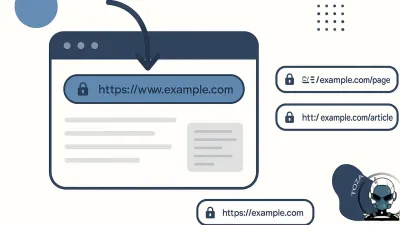
- Multiple URLs for the same page, with and without trailing slashes, mixed case, HTTP vs HTTPS, www vs non-www.
- Blog and service pages sitting in inconsistent folders, which makes reporting and internal linking harder than it needs to be.
- Parameters used for things that should be clean URLs, filters, sort orders, campaign tags leaking into indexable pages.
- Old campaign landing pages kept alive with no plan, creating thin duplicates of core service pages.
If you want the real world consequences and the fixes, read the hidden cost of poor URL structure for small businesses. It’s one of those “technical” topics that turns out to be quietly dragging down the whole site.
Rule of thumb: keep URLs stable, readable, and genuinely hierarchical. Don’t bake dates into URLs unless the date is the point. Don’t change slugs because a plugin claims it’s “more SEO”. Change URLs only when there’s a business reason, and redirect properly when you do.
Canonical URLs, how to stop duplicates from stealing your rankings
Canonical URLs, how to stop duplicates from stealing your rankings
Canonicalisation is where plenty of business sites accidentally trip themselves up. A canonical tag tells search engines which version of a page should be treated as the primary one when duplicates exist. And duplicates are everywhere in the real world, tracking parameters, category pagination, print views, CMS quirks, product variants, or the same content published in multiple sections.
What “wrong” looks like in practice:
- Canonicals pointing to the homepage or a parent category because someone applied a global rule without thinking through the fallout.
- Missing self-referencing canonicals on key templates, leaving Google to make its own call.
- Canonicals pointing to a redirected URL, which creates conflicting signals.
- Cross-domain canonicals used incorrectly during migrations or when syndicating content.
If you want a clear, practical explanation of how canonicals work (and how they fail), see Canonical URLs explained: why they matter and what happens when you get them wrong.
One habit that saves a lot of pain, treat canonicals as part of release QA. Template changes, page builders, ecommerce filters, and multilingual settings can break canonicals quietly, and you often don’t notice until performance drops.
Internal linking, the part of technical SEO most businesses ignore
Internal linking, the part of technical SEO most businesses ignore
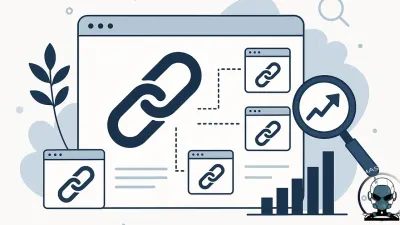
Internal linking is technical SEO wearing a content hat. It influences what Google discovers first, what it treats as important, and how authority moves through your site. It also determines whether a human can move from an informational article to a service page without having to hunt.
For small and mid sized business sites, internal linking is often the quickest win because it rarely needs new content or a redesign. Most of the time you’re cleaning up:
- Orphaned pages (good pages with no internal links pointing to them).
- Overlinked navigation where every page links to everything, which dilutes your signals.
- Blog posts that never link to the service pages that actually pay the bills.
- Inconsistent anchor text that makes page relationships harder for search engines to interpret.
We’ve set out a practical approach in why internal linking is the most underrated SEO strategy for small businesses. The short version, link intentionally, link contextually, and build clear pathways to your money pages.
Internal linking gets much easier when the site is organised into clear topic clusters. If you’re building out service areas, industries, or problem based content, use structured content silos as the organising principle, then link within and between silos with purpose.
Site performance, it’s not just speed, it’s crawl and conversion
Site performance, it’s not just speed, it’s crawl and conversion
Performance is one of the few technical levers that hits everything at once: rankings, crawl efficiency, user behaviour, and conversion rate. When a site is slow or unstable, you don’t just lose impatient users. Google crawls less, finds updates later, and over time can treat the site as lower quality.
Core Web Vitals matter, but obsessing over scores can turn into busywork. The real gains usually come from removing the big blockers that hurt real users:
- Heavy themes and page builders that ship too much CSS/JS to every page.
- Unoptimised images (especially hero banners) and missing modern formats.
- Third-party scripts that load site-wide even though they’re only needed on one page.
- Poor hosting configuration (slow TTFB, no caching strategy, misconfigured CDN).
For a grounded view of what to fix first and why it matters beyond “speed” read why website performance impacts more than just speed.
A practical approach, pick five high value pages, your top service pages and top organic landing pages, measure them using field data where possible, then fix the template level issues that lift every page. Avoid one off micro optimisations that only improve a single URL.
Structured data, how you stay unambiguous in AI driven search
Structured data, how you stay unambiguous in AI driven search
Structured data isn’t just about chasing rich results anymore. It’s about removing ambiguity. As search systems summarise, compare, and attribute information, you want your business details, services, reviews, products, and content types to be machine-readable.
What we typically implement on business websites:
- Organisation and LocalBusiness markup with consistent NAP details.
- Service (where appropriate) and clear page intent for key offerings.
- FAQ markup when the page genuinely contains Q&A content (not fabricated fluff).
- Breadcrumb markup to reinforce hierarchy.
- Article markup for blog content, with authorship and dates handled correctly.
AI driven search makes this more important, not less. See why structured data is becoming critical in AI driven search for how structured data affects interpretation and citation.
If you’re thinking about where SEO is heading more broadly, our piece How AI search results are changing website traffic is worth a read. It shifts your thinking from “ranking” to being the source that gets referenced.
Practical technical SEO workflow for business sites
Practical technical SEO workflow for business sites
Technical SEO goes off the rails when it’s treated as a once a year audit that gets filed away and forgotten. What actually works is a tight loop that fits around normal operations.
- Baseline: capture current index coverage, top landing pages, conversions, Core Web Vitals, and crawl stats. Without a baseline, you can’t prove impact.
- Triage: fix issues that affect lots of pages at once (template canonicals, redirect rules, performance bottlenecks, sitemap hygiene).
- Structure: clean up URL hierarchies and internal linking so new content naturally strengthens the pages that matter.
- Release discipline: build SEO checks into your deployment process. Canonicals, robots rules, noindex directives, and analytics tagging break during “small” changes all the time.
- Monitor: keep an eye out for spikes in excluded URLs, sudden shifts in indexed pages, and performance regressions after plugin/theme updates.
If your site is maintained by multiple people or vendors, document your URL rules, canonical rules, and internal linking approach. It stops you relearning the same lessons every six months.
Authority concentration, why some sites win with fewer pages
Business websites commonly lose rankings not because they lack content, but because they’ve spread authority across too many near-duplicate pages, thin location variants, or overlapping service pages. When internal links, canonicals and indexation aren’t disciplined, you end up with multiple URLs competing for the same intent and none of them becomes the obvious winner.
Authority concentration is the counter move: deliberately funnelling internal link equity, relevance signals and crawl attention into the pages that matter. This is where technical SEO and information architecture meet. You’ll typically see this implemented through:
- Clear page roles: one primary page per intent, with supporting pages that don’t cannibalise.
- Clean indexation: noindex/robots rules for low-value pages, and tight control of parameter URLs.
- Internal linking that reflects priority: navigation, hub pages, contextual links, breadcrumbs.
- Canonical and redirect discipline: so signals don’t split across duplicates.
If you’ve ever wondered how competitors outrank you with half the content, it’s usually because their signals are less diluted. This is unpacked in The Real Reason Some Websites Rank With Less Content: Authority Concentration.
Quick diagnostic: pick one high value query you want to win. Can you point to a single URL that is clearly the best match and is that the URL your internal links, canonicals and sitemap consistently reinforce? If not, you’re likely leaking authority.
Launch, redesigns and retrofitted SEO, where technical debt comes from
Most technical SEO problems on business sites aren’t “mysteries” they’re the predictable result of decisions made during a build or redesign, URL changes without redirect mapping, new templates that strip internal links, JavaScript heavy components that hide content, or page types that generate endless duplicates.
Adding SEO after launch usually means paying twice. You’re not just tweaking metadata; you’re undoing structural choices that affect crawl paths, indexation and authority flow. If you’re dealing with a site that was built first and “optimised later”, read What Happens When Your SEO is Added After Your Website Is Built it outlines the typical rework areas, structure, URLs, speed, content and templates, that impact rankings and leads.
Redesigns are another common source of technical debt. Businesses expect a visual refresh to lift SEO, but rankings often drop because the redesign accidentally resets key signals, internal links disappear, important pages move deeper, redirects are incomplete, and previously indexed URLs are replaced with new ones that have no history. This pattern is covered in Why Most Redesigns Fail to Improve Rankings.
Practical safeguard: treat SEO as a build requirement, not a post launch task. Before a redesign goes live, you should have (at minimum) a redirect map, a crawl of staging vs production, a list of priority URLs that must retain internal links, and a plan for handling removed/merged pages without creating soft 404s or duplicate intent pages.
AI driven search won’t kill SEO, but it will punish weak technical signals
AI driven search experiences are getting better at summarising, comparing and answering but they still rely on underlying signals to decide what to trust and what to surface. That’s where technical SEO becomes less forgiving, messy duplication, unclear entities, inconsistent internal linking and thin page purpose all make it harder for systems (human or machine) to interpret your site confidently.
The businesses that keep winning are the ones with structured authority, clear topical focus, strong internal reinforcement, and unambiguous entity signals, via content structure and schema. If you’re trying to separate hype from reality, read Will AI Replace SEO? The Real Answer Businesses Need.
What to prioritise now:
- Entity clarity: make it obvious who you are, what you do, where you operate, and what each key page is about, supported by structured data where appropriate.
- Signal consistency: align titles, headings, internal anchor text, schema and on page copy so they reinforce the same intent.
- Authority pathways: build content and internal links that naturally funnel users, and crawlers, from informational pages to your commercial pages.
- Reduce ambiguity: prune or noindex low value pages that dilute topic focus and crawl budget.
In other words, AI won’t replace SEO, but it will reward sites that are easiest to interpret and hardest to misclassify.
Technical SEO only works when it’s tied to a long term SEO strategy
Technical SEO is the plumbing. It can remove friction, consolidate signals and make your site easier to crawl, but it won’t create demand, define what you should rank for, or decide which pages deserve to be your “money pages”. That’s strategy.
If you don’t have a clear plan for what you’re building authority around, technical improvements often end up spread thin: dozens of “nice to have” fixes, but no lift where it counts, enquiries, demos, quotes, calls. A long term approach keeps technical work pointed at outcomes, the right landing pages, the right topical coverage, and the right supporting content and links.
For a practical view of how on page and off page fundamentals fit together and how technical SEO supports both, see Building a Long-Term SEO Strategy: On-Page and Off-Page Foundations Explained.
What this means in practice: before you touch templates, redirects or schema, lock in (1) your core commercial pages, (2) the supporting content that feeds them, and (3) the authority building activities that make Google take those pages seriously. Then use technical SEO to make those signals clean, consistent and hard to dilute.
Local SEO architecture, stop your service and location pages competing with each other
Local rankings are heavily influenced by how your site groups and separates intent. If your structure blurs the line between “what you do” (service) and “where you do it” (location), Google ends up with multiple near-duplicate pages that cannibalise each other — and you get inconsistent visibility across suburbs, regions, or service areas.
For a clear breakdown of how structure affects local performance, see How Website Structure Impacts Local Search Rankings. The practical takeaway is that architecture isn’t just UX, it’s how you signal relevance and hierarchy.
What this looks like on real business sites:
- Separate “service” from “location” cleanly: build a strong service hub e.g. /services/electrical/ and only create location pages where you can support them with real differentiation and internal links.
- Avoid thin suburb-page spam patterns: hundreds of near identical pages with swapped suburb names usually create index bloat and dilute authority. If you need coverage, consider fewer, stronger regional pages supported by case studies and project/service proof.
- Use internal linking to enforce hierarchy: service pages should link to relevant locations (and vice versa) in a way that matches how customers search, not just a footer dump of every suburb.
- Keep templates honest: if every location page uses the same headings, copy and FAQs, you’re telling Google they’re interchangeable. Add unique elements (team coverage, local projects, response times, compliance/regulatory notes where relevant).
- Align URLs, breadcrumbs and navigation: if the URL says “/locations/” but the breadcrumb says “Services”, you’re creating mixed signals. Consistency matters.
The goal is simple: when someone searches “{service} {suburb}”, Google should see one obvious best page for that query, supported by the rest of your site, not five similar pages fighting for the same job.
Local trust signals, the technical foundations behind map pack visibility
Most businesses treat local SEO like a separate marketing channel. In practice, Google’s local systems lean heavily on the same technical signals that underpin organic rankings: consistent entity data, clear location intent, and verifiable real‑world authority.
Start with your core entity data. Your business name, address and phone number (NAP) must be identical everywhere it appears: your website, Google Business Profile, major directories, industry listings and social profiles. “Close enough” variations (Suite vs Unit, 04 vs +61, abbreviations, old addresses still indexed) create reconciliation issues that show up as weak local confidence rather than an obvious technical error.
On-site, make your location signals unmissable:
- Dedicated location pages where you genuinely operate (not doorway pages), each with unique contact details, service coverage notes, and supporting proof (photos, testimonials, team info).
- Schema markup that matches reality (e.g., LocalBusiness/Organisation with address, geo, openingHours, sameAs), and is consistent with what’s in GBP and major citations.
- Indexation control so only the “right” local pages are indexable, and thin permutations (suburbs you don’t service, parameter URLs, internal search results) don’t dilute relevance.
- Authority signals that can be validated: local links, chamber/association memberships, supplier/partner pages, and coverage from real local publications.
If you want the practical playbook that ties GBP fundamentals, NAP consistency, structured data and trust signals together (without the fluff), see Local SEO for Businesses: What Actually Works.
The technical SEO takeaway: local performance isn’t won with hacks. It’s won by making your business entity easy for Google to reconcile across the web, then reinforcing it with clean site architecture and credible, location-relevant authority.
Technical SEO checklist, the non negotiables before you scale content or links
Most business sites don’t lose rankings because they “need more content”. They lose them because the foundations are inconsistent: indexation rules that contradict each other, duplicate URL variants, internal links that don’t reflect commercial priorities, and migrations done without a safety net.
If you want a practical baseline you can hand to a developer (or use to QA an agency), start with A Technical SEO Checklist for Structurally Sound Websites. It’s the kind of checklist that catches the quiet failures early:
- Structure and crawl control: confirm Google can reach money pages, while faceted/search/internal utility URLs aren’t soaking up crawl budget.
- Canonical and duplication hygiene: standardise preferred URL formats (case, trailing slash, parameters), and make sure canonicals match the indexable version you actually want ranking.
- Internal linking: ensure service/category pages aren’t orphaned, and that navigation and in-content links reinforce your priority pages (not random blog posts).
- Performance and rendering: fix bottlenecks that affect both crawling and conversion (heavy JS, bloated templates, slow TTFB).
- Schema: add structured data where it clarifies entities and page intent, not as a “rich result lottery ticket”.
- Migrations and redesigns: treat redirects, canonicals, sitemaps and post-launch validation as a process — not a one-off task list.
Use it as an audit framework, but also as a release gate: if a change fails any of the checks above, it doesn’t ship until it’s fixed. That’s how you prevent technical debt from becoming an SEO “mystery” six months later.
Content syndication (Medium, Quora) without creating duplicate content headaches
Syndication and off site publishing can be useful for discovery but it can also create technical SEO mess if you don’t control canonical signals and indexing outcomes. The goal is simple: your website remains the source of truth, and other platforms help people find you.
Medium and syndication: if you republish articles on Medium (or similar), you need to handle canonicalisation properly so Google attributes the primary version to your site. Done well, syndication extends reach without stealing rankings. Done poorly, you’ve just created a stronger duplicate on a higher authority domain. For the practical approach, see Medium and Content Syndication: Extending the Lifespan of Your Ideas.
Quora visibility: Quora is less about duplicating your articles and more about meeting buyers at the question stage, where intent is often clearer than in generic search queries. From a technical SEO angle, the win is that Quora answers can drive qualified visits to the right landing page (not your homepage), reinforcing topical relevance and behavioural signals around your commercial pages. For examples of how to approach it, read Quora and Intent Based Visibility: Meeting Buyers at the Question Stage.
Rules of thumb that keep your site clean:
- Publish the full version on your site first, or at least ensure your version is indexable before syndicating.
- Use canonical links where the platform supports it; otherwise, syndicate excerpts and link back.
- Link to the most relevant deep page, service, category, or hub, not a generic page.
- Track whether syndication pages are outranking your original, if they are, you need to adjust the approach.
Architecture signals, how Google actually discovers and prioritises pages
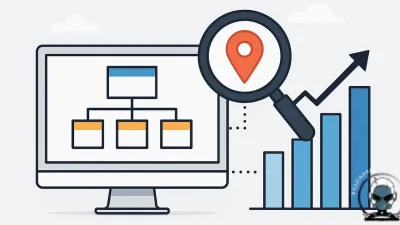
Most business sites don’t have a “technical SEO problem” so much as an architecture problem. Google doesn’t experience your site like a human clicking around the main menu, it discovers pages via crawl paths, then decides what to prioritise based on internal link signals, URL patterns, and how consistently your templates reinforce what matters.
In practice, that means your category/service hubs, location hubs, and key commercial pages need to sit on short, repeatable paths from the homepage and other authority pages. If important pages require multiple hops through thin intermediaries, or only exist behind on-site search, filters, or JavaScript-driven navigation, they’ll be discovered later, crawled less often, and treated as less central to the site.
If you want a practical breakdown of the signals search engines use to interpret your site structure, including how internal links create priority, how crawl depth changes discovery, and what “good” architecture looks like in the wild, see How Search Engines Crawl and Understand Website Architecture. It’s the lens you should apply before you touch content, links, or schema.
Practical checks that catch architecture issues early:
- Click depth: Can you reach every money page in ~3 clicks from the homepage via static links, not just mega menus with JS, not just HTML sitemaps?
- Hub integrity: Do your hub pages, services, industries, locations, link out to all relevant children and receive links back, or are they orphaned “index pages”?
- Template leakage: Are global elements, footer, related posts, “popular products” accidentally pushing crawl priority to low value pages?
- Parameter and faceted navigation: Are filters generating near infinite crawl paths that compete with real pages?
Clean architecture isn’t about making Google happy in theory, it’s about ensuring your best pages are the easiest to find, the most reinforced by internal links, and the least diluted by noise URLs.
Crawl budget triage for business sites, stop wasting Googlebot on junk URLs
Crawl budget is rarely the limiting factor on small sites, but it becomes very real once you have: lots of faceted URLs, heavy duplication from parameters, large inventories, or a platform that generates multiple URL variants for the same page. The tell is simple: Google keeps crawling, and sometimes indexing the wrong stuff while your important pages update slowly or don’t stabilise in rankings.
Most crawl budget problems are self inflicted. Businesses accidentally create thousands of low-value URLs, filters, session IDs, internal search results, tag pages, printer-friendly versions, tracking parameters, then wonder why Google is slow to pick up new services, locations, or product changes. The fix is rarely “submit more sitemaps”, it’s reducing crawl waste and making priority obvious.
For a diagnostic approach and the most common causes, duplicate URLs, weak internal architecture, server constraints, plus what to do about each, read Understanding Crawl Budget and Why It Matters.
What to do when crawl budget is being wasted:
- Identify the junk: In Search Console crawl stats and server logs, look for heavy crawling of parameterised URLs, internal search pages, tag archives, and thin pagination.
- Consolidate duplicates: Enforce one preferred URL per page, canonical, consistent internal linking, and redirect legacy variants.
- Control parameters and facets: Where filters must exist for users, prevent them becoming indexable crawl traps e.g., noindex for non-strategic combinations, limit crawlable facets, use stable category URLs for SEO.
- Fix “infinite” discovery: Remove auto generated link blocks that expand endlessly, calendar pages, “load more” URLs, user-generated tag sprawl.
- Improve server responsiveness: If response times or error rates spike under crawl, Google will back off, and important pages will be recrawled less often.
The goal isn’t to maximise crawling; it’s to ensure the crawling you get is spent on pages that matter commercially and that you actually want indexed.
Sources & Further Reading
- Google Search Central: SEO Starter Guide
- Moz: The Beginner's Guide to SEO - Technical SEO
- HubSpot: The Ultimate Guide to Technical SEO
- Google Search Central - SEO Starter Guide
- Moz - The Beginner's Guide to SEO: Technical SEO
- HubSpot - The Ultimate Guide to Technical SEO
- Search Engine Journal - Technical SEO: The Definitive Guide
- Google PageSpeed Insights

Want a technical SEO health check?
We’ll review your crawl, canonicals, performance and structure, then give you a clear fix-first plan.
Get in TouchComments
No comments yet. Be the first to join the conversation!















Leave a Comment
Your email address will not be published. Required fields are marked *