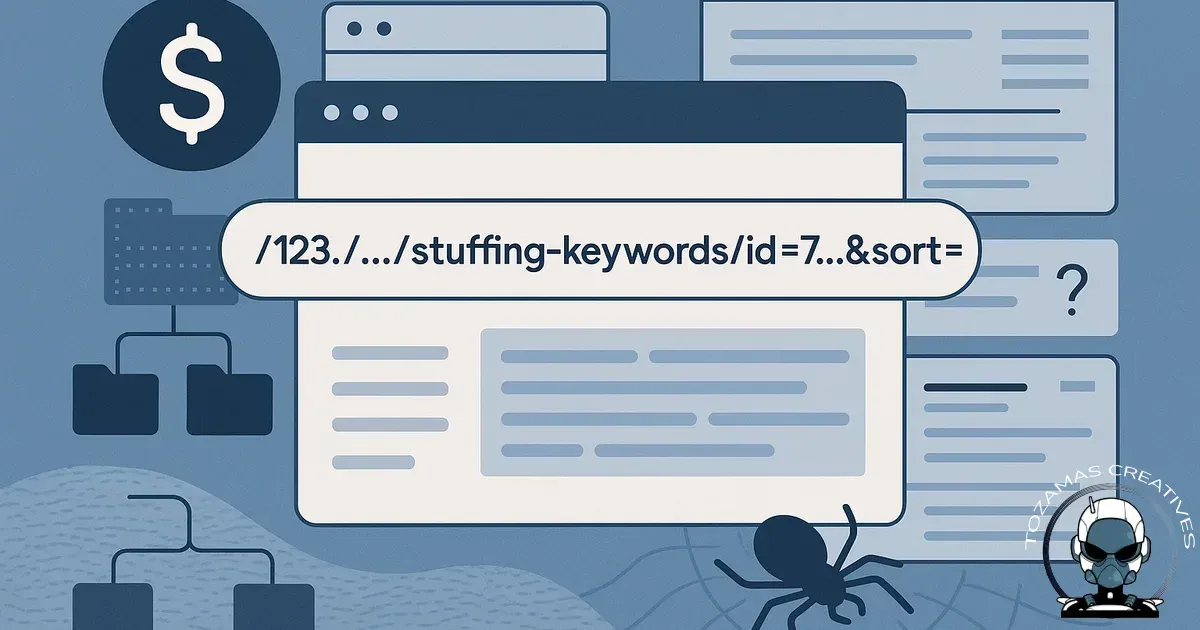
Why poor URL structure costs more than you think
In fact, studies show that businesses with optimized URL structures see up to a 50% increase in organic traffic compared to those with poorly structured URLs. Poor URL structure quietly drains SEO performance, wastes paid traffic, and makes everyday site changes harder than they should be. It usually starts small, a few “temporary” URLs, a plugin that adds parameters, a rushed category setup. Then it compounds: Google crawls the wrong pages, analytics gets messy, and your best content competes with duplicates you didn’t even know existed.
Messy hierarchies: when your site stops making sense
A clean hierarchy tells Google (and customers) where they are and how pages relate. A messy hierarchy does the opposite. It creates dead ends, bloats crawl paths, and makes internal linking harder to manage.
Too many folders: /services/marketing/digital/seo/brisbane/local/ starts to look like “we kept adding labels” rather than a logical structure.
Random mixes of categories and products: /shop/collections/sale/product-name and /products/product-name living side-by-side creates duplication and confusion.
Blog URLs that change with themes or CMS updates: /2026/02/13/post-title/ is a common legacy structure that makes evergreen content harder to maintain.
Every extra layer increases the chance that your CMS generates multiple versions of the same page, and that internal links point to inconsistent paths. If you want a broader view of how structure underpins performance, this is worth reading: Why Website Architecture Matters More Than Design.
What “good” looks like
Short and stable: /services/seo/ or /locations/gold-coast/
One clear system: either you use /blog/ for posts or you don’t, but you don’t mix patterns.
Category intent is obvious: /services/, /case-studies/, /blog/, /shop/ are clear to humans and bots.
Keyword stuffing in slugs: the fastest way to look spammy (and create duplicates)
Some SEO advice from years ago still lingers: cram suburbs and services into every URL. In practice, it creates brittle URLs that you’ll later want to change, and it often leads to multiple pages targeting the same intent.
Hard to maintain: if you expand from Brisbane to Ipswich, do you rename everything again?
Inconsistent internal links: staff copy and paste different versions, so the same page gets linked with variations.
Higher risk of cannibalisation: multiple similar URLs compete for the same query, and neither ranks as well as it should.
Use keywords naturally where they help clarity, not as a dumping ground. A slug should describe the page in plain language: /services/seo/ beats /seo-services-brisbane-gold-coast-sunshine-coast-best-seo-agency/.
Parameter chaos: when one page turns into fifty
Parameters are anything after a question mark, like ?sort=price or ?filter=brand. They’re common in ecommerce and bookings, and they’re not “bad” by default. The problem is uncontrolled parameter combinations creating near-infinite URL variations.
Faceted navigation explosions: colour + size + price + category can generate thousands of URLs, most with thin or duplicate content.
Tracking tags indexed as pages: UTM parameters (from email, Meta ads, etc.) can accidentally become crawlable if the site is misconfigured.
Session IDs in URLs: some systems append a unique ID per user, generating endless duplicates.
The real cost: crawl budget and index quality
Google doesn’t crawl every URL equally. If it spends time crawling parameter variations and duplicates, it crawls important pages less often. That shows up as slower ranking improvements, delayed updates after you change content, and important pages sitting “discovered, currently not indexed” in Search Console.
If you’ve ever wondered why SEO effort doesn’t translate into results, this is often part of the answer. SEO isn’t a set of tricks, it’s site infrastructure: SEO Is Not a Tactic. It’s Infrastructure for Australian Small Businesses.
How bad URL structure compounds over time
Most small businesses don’t rebuild URLs because they’re busy running the business. So the site grows around the original mistakes. Over time you get:
Redirect chains: Page A redirects to B, which redirects to C. This slows crawling and bleeds authority.
Orphan pages: pages still live but no longer linked in menus, so Google barely finds them.
Broken reporting: analytics shows “multiple pages” for the same content because URLs differ slightly.
Harder site changes: migrating CMS, changing navigation, or launching new categories becomes risky because no one trusts the URL system.
It also creates internal tension between marketing and operations. Marketing wants new landing pages fast. Operations wants stability. A sensible URL system makes both possible.
Practical fixes you can apply (without a full rebuild)
1) Pick a URL standard and document it
Write down simple rules your team and contractors can follow. For most Australian SMEs, this works well:
Lowercase only
Hyphens between words (no underscores)
No dates in evergreen content URLs
One preferred version: trailing slash or not, but consistent
Keep slugs short and descriptive (3 to 6 words is usually plenty)
2) Control parameters properly
Canonical tags: ensure filter and sort variations point back to the main category URL where appropriate.
Noindex where needed: thin filter combinations should often be excluded from indexing.
Block crawl traps: use robots.txt carefully to reduce crawling of infinite parameter patterns (done wrong, this can hide valuable pages, so treat it as a technical job).
Keep UTMs out of index: make sure tracking parameters don’t generate indexable duplicates.
3) Merge duplicates and redirect once
If you have multiple URLs serving the same intent, pick the strongest version (best links, best performance, cleanest URL), then:
Update internal links to the preferred URL
301 redirect the duplicates directly to it (avoid chains)
Update your XML sitemap to only include preferred URLs
4) Simplify the hierarchy before you add more pages
If your structure is already messy, stop the bleeding first. New pages should follow the new rules, even if legacy pages don’t yet. That gives you a clean “future state” while you progressively tidy old sections.
5) Use Search Console to find the damage
Indexing report: look for “Duplicate, Google chose different canonical” and “Crawled, currently not indexed”.
Pages report: sort by impressions and identify multiple URLs that look like the same page.
Sitemaps: confirm the sitemap only contains canonical, preferred URLs.
When to fix URL structure properly (and when to leave it alone)
URL changes can be high-impact. Done well, they clean up indexation and lift performance over time. Done poorly, they can cause ranking drops and broken marketing links.
Fix it now if you have parameter-generated bloat, lots of duplicates, or you’re about to scale content and landing pages.
Be conservative if your site ranks well and your main issue is content quality or offer clarity. In that case, stabilise rules for new pages and improve the worst offenders first.
A URL should be an asset, not technical debt
Clean URLs are not about looking pretty. They reduce crawl waste, improve reporting, make content easier to maintain, and help every marketing dollar go further. The earlier you tighten structure, the less you’ll spend later untangling redirects, duplicates, and underperforming pages.
Sources & Further Reading

Structure Starts at the URL Level
URL architecture influences crawl paths, authority flow, and long-term scalability. We design clean, strategic structures into every website we build.
View Our Website Build PackagesComments
No comments yet. Be the first to join the conversation!



Leave a Comment
Your email address will not be published. Required fields are marked *