
Why most redesigns fail to improve rankings comes down to one uncomfortable truth: a redesign is usually treated as a visual project, while Google ranks based on structure, relevance, and authority signals that live under the surface.
The silent ranking killers hiding inside a “fresh look”
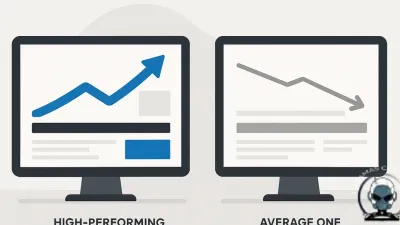
For many Australian small businesses, a redesign happens after years of patchwork updates. New pages get added, old services are retired, menus are rearranged, and the site slowly becomes hard to manage. In fact, studies show that 70% of website redesigns fail to achieve their desired SEO outcomes, highlighting the importance of maintaining site structure during a redesign.
The problem is that Google doesn’t see a clean slate. It sees continuity. If you reset the structure without protecting the pathways that carry relevance and authority through your site, rankings rarely improve, and often drop.
1) Structural resets: the fastest way to erase what Google understood
Most redesigns start with new navigation and new page templates. That seems harmless, but it often changes the way content is grouped and the way pages relate to each other.
Google relies heavily on internal structure to understand:
- which pages are your core “money pages” (services, location pages, key products)
- which pages support them (FAQs, guides, case studies)
- how deep important pages are buried in the click path
- what topics you’re actually authoritative in
Common redesign mistakes we see:
- Flattening everything into a single Services page to “simplify the menu”, wiping out well-performing individual service URLs.
- Switching from logical categories to aesthetic groupings that don’t match how people search (and how Google clusters intent).
- Moving key pages deeper (two clicks becomes four) because the new theme prioritises visuals over access.
If you want a site that grows in organic traffic, architecture needs to lead the redesign, not the other way around. This is why we push hard on structure in Why Website Architecture Matters More Than Design.
Action check
- List your current top 20 organic landing pages (from Google Search Console). Protect their intent and their place in the hierarchy.
- Keep important pages within 1–2 clicks of the homepage where practical.
- Group pages around search intent (services, industries, locations) rather than internal business org charts.
2) Lost internal linking: authority stops flowing where it used to
Internal links do more than help users navigate. They distribute authority and clarify relevance through anchor text and context. During redesigns, internal linking is often “cleaned up” or accidentally removed when old page modules are retired.
Three patterns cause the most damage:
- Navigation-only linking: old content that used to link contextually to service pages gets replaced with generic menu links.
- Orphaned pages: pages still exist (or still get backlinks) but are no longer linked anywhere meaningful on the site.
- Anchor text dilution: “Read more” and “Learn more” replace descriptive anchors, weakening topical signals.
Internal links are also where small businesses can compete without huge backlink budgets. You can’t always outspend competitors, but you can build a clearer topic map and send authority to the pages that matter.
Action check
- Before launch, crawl the old site and export internal links (tools like Screaming Frog make this straightforward).
- For every core service page, ensure it receives links from relevant supporting pages (FAQs, blogs, case studies), not just the menu.
- Use natural, descriptive anchor text that matches the page intent (not exact-match spam, just clarity).
3) Broken redirects: you don’t just lose traffic, you lose trust signals
When URLs change, redirects are not optional. Yet redesigns often ship with partial redirect lists, homepage redirects for everything, or long redirect chains created by “quick fixes” after launch.
What this causes in practice:
- Backlinks stop benefiting you if the linked URL returns 404 or is redirected poorly.
- Relevance breaks when old pages are redirected to unrelated new pages (Google may treat this as a soft 404).
- Crawl budget is wasted on redirect chains and loops, delaying re-indexing of the new structure.
A clean redirect plan protects authority you’ve already earned. For many SMEs, that authority is the only reason they rank at all in competitive local search.
Redirect rules that actually hold up
- Map old URL to the closest matching new URL by intent. Redirecting everything to the homepage is usually a net loss.
- Prefer one hop: old URL → final URL. Avoid chains (A→B→C).
- Keep high-performing URLs stable where you can. If the page still serves the business, keep the URL.
- Test before and after launch: run a crawl of the old URL list to confirm 301s resolve to 200 status pages.
4) Ignored authority signals: your redesign doesn’t earn trust by looking better
Design can improve conversions, but rankings depend on signals that indicate credibility, expertise, and relevance. Redesigns often remove or weaken these signals because they don’t fit the new layout.
Signals commonly lost in redesigns:
- Proof elements like case studies, project galleries, certifications, association memberships, and detailed testimonials.
- Real business details that support local trust: consistent NAP (name, address, phone), service areas, and contact clarity.
- Content depth: detailed pages get replaced with shorter “sleek” copy that no longer matches search intent.
- Topical consistency: blogs and guides are moved, pruned, or noindexed without checking which ones bring qualified traffic.
Google’s systems are designed to reward sites that demonstrate helpfulness and trust. If your redesign strips out the substance that made your site credible, rankings often drift down over weeks rather than crashing overnight, which makes the cause harder to pinpoint.
Action check
- Identify pages that rank because they answer niche questions. Don’t delete them just because they’re not “on brand”.
- Keep (or improve) service page depth: what you do, who it’s for, what’s included, pricing guidance where appropriate, and proof.
- Ensure local signals are consistent site-wide, especially if you rely on location-based searches.
A practical redesign process that protects rankings
If you want the redesign to improve rankings, treat it like a migration project with SEO guardrails.
Before design begins
- Export top landing pages, top queries, and pages with the most internal links (Google Search Console + a crawl).
- Pull backlink targets (from Search Console or a link tool) so you know which URLs carry external authority.
- Decide what stays, what consolidates, and what is truly obsolete based on data, not aesthetics.
During build
- Lock in the URL plan early. Changing URLs late usually leads to redirect mess.
- Rebuild internal linking intentionally: supporting content should point to core services with clear anchors.
- Maintain on-page essentials: unique titles, headings that reflect intent, and content that answers the query properly.
Launch week
- Implement the redirect map and test it in bulk.
- Submit updated sitemap in Google Search Console.
- Check for noindex tags, blocked resources, and broken canonicals introduced by the new theme or plugin stack.
First 30 days after launch
- Monitor coverage, 404s, and indexing changes in Search Console.
- Track rankings by page type (services vs blog vs location pages). Drops often cluster around one structural change.
- Fix internal link gaps and orphaned pages quickly. Don’t wait for “Google to figure it out”.
When a redesign can improve rankings
Rankings tend to lift after a redesign when the project improves crawl efficiency and clarity, not just visual appeal. That usually means better information architecture, tighter internal linking, faster performance, and content that matches real search intent.
For a deeper view of how SEO needs to be built into the foundations, not bolted on, see SEO Is Not a Tactic. It’s Infrastructure for Australian Small Businesses.
What to do if you’ve already launched and rankings dipped
Most post-redesign ranking drops are recoverable if you act quickly and work methodically.
- Start with redirects: fix 404s, remove chains, correct irrelevant redirects.
- Restore internal links: re-add contextual links from relevant pages to your core services.
- Compare old vs new: check what content was removed or shortened on pages that lost rankings.
- Validate technical basics: canonicals, robots, sitemap, mobile rendering, Core Web Vitals.
If you treat the redesign like a structural reset, you can rebuild the signals that rankings depend on. If you treat it like a coat of paint, Google will treat it like a different (and often weaker) website.
Sources & Further Reading

Redesign Without Regression
A redesign should enhance structure, not disrupt it. Our development process protects existing authority while strengthening long-term SEO foundations.
Plan Your Structured RebuildComments
No comments yet. Be the first to join the conversation!


Leave a Comment
Your email address will not be published. Required fields are marked *