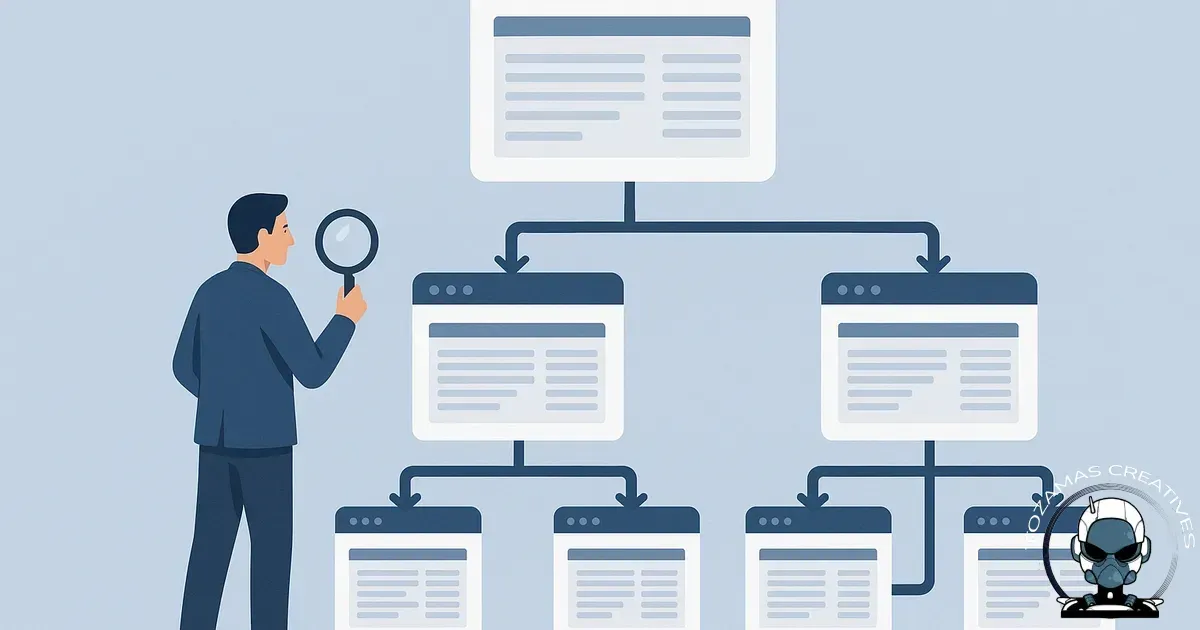
Some sites rank with less content because they concentrate authority into a small set of pages, strengthen internal linking, and keep their signal structure clean so Google can trust what each page is about.
Quantity isn’t the lever Google pulls first
Australian business owners often assume they need to publish endlessly to compete. Research shows that websites with fewer than 10 primary service pages can achieve up to 60% more authority concentration, leading to significantly improved discoverability. They remove ambiguity, reduce duplication, and make it easy for Google (and customers) to find the “main” page for each service.
More pages can help, but only when each page has a clear purpose and earns its place. If new pages split attention across similar topics, they can dilute rankings rather than lift them.
Authority concentration beats topic sprawl
Google ranks pages, not websites. When you spread one service across five near-identical pages (or dozens of thin blog posts), you often split link equity, relevance signals, and user engagement across multiple URLs. The outcome is predictable. None of them looks like the obvious best result.
Authority concentration means making one strong “pillar” page the primary destination for a topic, then supporting it with genuinely useful subpages only where needed. For a Queensland trade business, that might look like:
- One core “Electrical Services” page that explains scope, areas served, licensing, process, pricing approach, and FAQs.
- Separate subpages only for distinct, high-intent services (switchboard upgrades, solar repairs, emergency call-outs) where search intent is different.
- Location pages only where you can write specifics that matter (response times, common jobs, local compliance points), not copy-paste suburb lists.
This structure creates a clear centre of gravity. Links, brand mentions, and user behaviour reinforce one URL as the best answer.
Internal linking is the multiplier most small sites ignore
Backlinks are hard to earn. Internal links are free, but they need to be deliberate. Strong internal linking does three jobs:
- Distributes authority from your homepage and high-traffic pages to your money pages.
- Clarifies topical relationships so Google understands which page is the primary service page versus supporting detail.
- Improves user pathways which lifts engagement and increases conversions.
Common internal linking problems we see on small business sites:
- Important service pages only linked in the menu, nowhere in body copy.
- Blog posts that never link back to the relevant service page (missed commercial intent).
- Multiple pages competing for the same anchor text (for example, “SEO services” linking to three different URLs).
- Orphan pages that exist in the CMS but have no meaningful links pointing to them.
If you want a practical framework for structure, this ties closely to why website architecture matters more than design. Architecture is where authority either concentrates or leaks.
A simple internal linking approach that works
- Pick the primary page for each service. One URL per core intent.
- Add contextual links from related pages using natural anchor text (not the same phrase every time).
- Use supporting content to feed the pillar. Each supporting page should link back to the pillar and to one or two closely related pages.
- Link to the next step. Every service page should link to a contact or quote step that matches the offer (form, booking, phone).
Clean signal structure: reduce noise, remove doubt
Websites that rank well with less content usually send cleaner signals. Google sees one primary URL for a topic, consistent internal links pointing to it, and no confusing duplicates.
Signal noise typically comes from:
- Duplicate and near-duplicate pages (service pages rewritten three times, suburb pages that say the same thing, old campaign landing pages left live).
- Index bloat where tag pages, internal search results, filter URLs, and thin pages are indexed without adding value.
- Inconsistent titles and headings that don’t match on-page content, or multiple pages with very similar titles.
- Mixed intent where a page tries to rank for informational and transactional searches but satisfies neither.
Cleaning this up is often a faster ranking lift than writing another 20 blogs. It’s also why technical basics matter, not as a checklist, but as infrastructure. If you want the bigger picture, SEO is not a tactic. It’s infrastructure explains the mindset shift.
Quality that actually moves rankings (and leads)
“Quality content” isn’t longer paragraphs. It’s information that matches intent, proves credibility, and removes friction from the buying decision. For small businesses, high-ranking pages with less content usually nail a few specific elements:
- Clear positioning: who the service is for, what you do, and what you don’t do.
- Evidence: licences, accreditations, before-and-after examples, results, testimonials, and specific project types.
- Process detail: what happens after a call, timelines, what you need from the client, how you quote.
- Local relevance: service area described realistically (not 60 suburbs in the footer), and cues that you operate locally.
- Helpful specificity: pricing ranges where appropriate, common pitfalls, maintenance advice, compliance notes.
Google doesn’t need you to write a novel. It needs confidence that your page is the best answer for that search, and that users won’t bounce because it’s vague, untrustworthy, or hard to use.
Practical fixes you can action this month
- Map your “one page per intent” plan: list your core services and nominate the primary URL for each. If you have multiple, choose the best one and merge or redirect the rest.
- Strengthen your top 5 pages: add real proof (photos, numbers, steps, FAQs) and tighten headings so the page reads like the definitive service page.
- Audit internal links: from your homepage, about page, and highest-traffic blogs, add contextual links to the pages that make you money.
- Remove index clutter: noindex thin tag pages, internal search pages, and anything that doesn’t deserve to rank.
- Check for cannibalisation: if two pages target the same query, pick a winner, consolidate, and keep a single strong URL.
What to measure so you know it’s working
- Search Console: impressions and average position for your primary service queries, plus which URL is ranking for them.
- Leads per landing page: form submissions and calls that start on service pages, not just overall traffic.
- Internal link coverage: your money pages should be linked from multiple relevant pages, not only the navigation.
- Index count sanity: fewer indexed low-value pages is often a sign you’ve reduced noise.
If you do this well, you’ll often see a lift without publishing more. You’ve simply stopped your site from competing with itself and made it easier for Google to back the right pages.
Sources & Further Reading
- How Search Algorithms Work - Google Search Central
- SEO Starter Guide - Google Search Central
- The Importance of Internal Linking for SEO - Moz
- Content Quality Guidelines - Australian Competition and Consumer Commission (ACCC)
- Local SEO: The Definitive Guide - HubSpot
- Australian Small Business and Digital Marketing - Australian Government Business

Quality Structure Outperforms Quantity
Search performance depends on structured authority, not content volume alone. We design SEO frameworks that maximise signal strength across every page.
Explore Our SEO-Focused BuildsComments
No comments yet. Be the first to join the conversation!



Leave a Comment
Your email address will not be published. Required fields are marked *