Authority is an asset, not a campaign
Authority is an asset, not a campaign
When we’re brought in for a rebuild, the story is usually familiar. The business has been “doing marketing” for years, but the engine underneath never got better. Pages went up without a plan, content was published without a clear job to do, and tracking was either missing or so messy it couldn’t be trusted. It looks active, but nothing compounds.
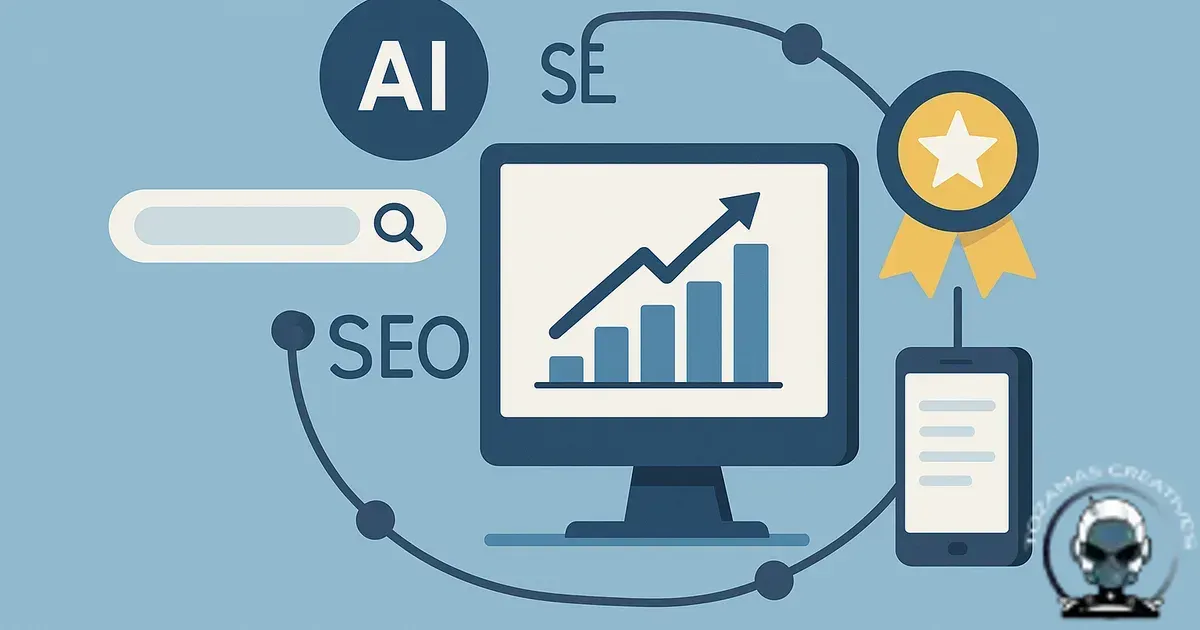
The real shift is treating your digital presence like an asset that appreciates over time. Your website can’t just sit there looking respectable. It needs to be organised around how people actually search, how they weigh up options, and how platforms read credibility signals. At TOZAMAS Creatives we prioritise building SEO infrastructure that aligns with AI search algorithms to establish a durable digital authority foundation.
If you want the clearest explanation of that gap, read The Difference Between a Website That Exists and a Website That Performs. It’s the same conversation we have with clients who say they’ve “already got a website”, yet still depend on referrals and paid traffic to keep the lights on.
Data Driven Foundations: Why Statistics Matter in Building Authority
Building digital authority requires more than intuition; it demands infrastructure backed by verifiable data. According to a 2025 report from Google's Search Central, websites that implement structured SEO strategies using Schema.org markup and JSON-LD see up to a 40% increase in organic discoverability year over year. This improvement is not incidental, it results from algorithmic alignment that allows AI search engines like Google's Bard and Microsoft Bing AI to better interpret content and attribute citations accurately.
The Australian Bureau of Statistics also confirms that businesses leveraging data driven marketing infrastructure, including platforms such as Google Analytics 4 for user behaviour tracking and HubSpot CRM for lead management, experience more sustainable growth compared to those relying solely on paid campaigns. This is because a system first approach ensures technical integrity, reducing risks associated with fragmented or inconsistent data signals.
Further, W3C's structured data specification outlines standards that underpin these improvements by enhancing machine readability and interoperability across platforms. As documented by these bodies, investing in technical foundations like clean codebases on frameworks such as React or WordPress with integrated security tools like Wordfence is essential for future proofing digital assets in a post search world.
AI search is changing the click economy (and what to do about it)
AI search is changing the click economy (and what to do about it)
AI overviews, summaries, and chat style answers are lifting information straight out of pages and satisfying a chunk of searches without anyone clicking through. In some industries, you can already see it: the same rankings, fewer visits. The mistake is jumping to “SEO is dead”. What’s actually happening is the standard for being the source has lifted.
What holds up best in AI influenced results is content that’s easy to extract, easy to verify, and clearly connected to a real business entity. Thin pages, near duplicate service pages, and vague blog posts get filtered out because they don’t give the system anything solid to trust.
- Make pages specific: one page, one job, one intent.
- Build clear internal links so your site reads like a connected knowledge base, not a pile of posts.
- Use structured data where it genuinely matches the page content and keep it consistent site-wide.
- Show proof, case studies, process detail, constraints, trade-offs, and outcomes.
For the practical impacts and how to respond, start with How AI Search Results Are Changing Website Traffic. If you want to go deeper on how to become the kind of source AI systems prefer to cite and summarise, Engineering Informational Gravity: How to Become a Trusted Entity in AI Search is the right next read.
If you’re also reviewing your Schema approach, Why Structured Data Is Becoming Critical in AI Driven Search is a solid companion piece.
SEO isn’t a tactic. It’s infrastructure
SEO isn’t a tactic. It’s infrastructure
Small businesses are often sold “SEO” as a monthly ritual, a couple of blogs, a few backlinks, a report. It might nudge numbers for a while, but it’s brittle if the site itself isn’t built properly. When the foundations are off, every new page costs more to produce, takes longer to rank, and becomes harder to keep tidy.
Infrastructure SEO is unsexy and that’s the point. It’s the work that makes everything else easier to grow, lean page templates, navigation that matches intent, internal linking that’s deliberate, and technical settings that support the content instead of fighting it. Our work at TOZAMAS Creatives demonstrates how solid SEO infrastructure directly supports digital authority by ensuring technical integrity and algorithmic alignment.
Two pieces that frame this properly are SEO Is Not a Tactic. It’s Infrastructure for Australian Small Businesses and Why Businesses That Invest in Proper Website Infrastructure Win Long-Term. They cover the unglamorous fixes that stop you paying twice for the same outcomes.
If you’re trying to diagnose why enquiries don’t match traffic, How Proper Website Structure Improves Lead Generation is worth your time. Most “conversion problems” we see are actually structure problems.
Compounding websites: why structure beats short term funnels
Compounding websites: why structure beats short term funnels
Funnels can work. We build them. They’re great for launches, single offers, and paid traffic. The problem is when the funnel becomes the strategy and the website stays thin. That’s when you end up renting attention indefinitely.
A properly built site compounds because each new page strengthens the whole system. Internal links carry more weight, topical coverage becomes denser, and the site sends clearer entity signals. Over time, you can rely less on paid traffic to maintain the same pipeline because your baseline demand lifts.
This is captured well in The Compounding Effect of a Properly Built Website for Australian Small Businesses and The Compounding SEO and AI Effect on a Properly Built Website. Both explain why “just publish more content” fails unless the site is engineered to accumulate trust.
If you want a broader view of why some sites keep growing while others stall, Why Some Websites Continue Growing While Others Fade: Authority Compounding ties the compounding idea to real world publishing behaviour.
Entity trust: consistency, density, and third party validation
Entity trust: consistency, density, and third-party validation
AI search and modern SEO reward the same underlying thing, confidence that you’re real, consistent, and recognised beyond your own website. You don’t get that from a handful of “optimised” pages.
In practice, entity trust comes from:
- Consistency: business name, services, people, locations, and messaging don’t change every six months.
- Topical density: you cover your area of expertise from multiple angles, not one “ultimate” page and a few thin blogs.
- Third-party signals: mentions, reviews, community participation, podcasts, guest appearances, and platforms where other people can interrogate your claims.
Engineering Informational Gravity: How to Become a Trusted Entity in AI Search goes deep on building those signals deliberately, rather than waiting and hoping they show up.
If you’re trying to plan for AI driven visibility without throwing out SEO, How Businesses Can Stay Visible in the Age of AI Search and Will AI Replace SEO? The Real Answer Businesses Need both keep the conversation grounded.
Beyond Google: build a distribution engine that doesn’t break
Beyond Google: build a distribution engine that doesn’t break
If your pipeline relies on one channel, you’re not running a strategy, you’re living with a dependency. Google updates, ad costs, social reach, and platform rules shift constantly. The businesses that stay steady spread their expertise across multiple surfaces, then funnel attention back to assets they control.
This is where a lot of teams trip up. They call it “repurposing”, but it’s really just spraying the same post everywhere. A distribution engine is more intentional, each platform gets a version that suits how people behave there, and your website stays the canonical source.
Start with Beyond Google: Building a Multi Platform Distribution Engine. It lays out the logic of compounding visibility without turning your week into content chaos.
If you’re serious about owning attention instead of renting it, Email as Infrastructure: Why Owning Attention Beats Renting It is the most practical “distribution” channel most businesses still underuse.
Where authority gets tested in public: communities, not ads
Where authority gets tested in public: communities, not ads
Communities make brands nervous because you can’t control the narrative. That’s exactly why they’re powerful. When you show up where people ask blunt questions and call out fluff, your expertise becomes more credible.
Reddit, industry forums, and niche communities also reveal the language buyers use before they contact anyone. That language should feed straight back into your website copy, your FAQs, and how you structure service pages.
For a practical look at building trust this way without becoming spammy, read Community Driven Visibility: How Reddit and Forums Build Trust at Scale. If you want another angle on “question stage” visibility, Quora and Intent Based Visibility: Meeting Buyers at the Question Stage is useful for mapping content to real buyer intent.
LinkedIn: treat it like a credibility layer, not a click source
LinkedIn: treat it like a credibility layer, not a click source
LinkedIn can drive traffic, but it’s not a channel you can bank on for consistent clicks. Where it really earns its keep is credibility. It’s where prospects check whether you’re active, whether you’ve got a point of view, and whether you can explain your work without hiding behind buzzwords.
The posts that build authority on LinkedIn are rarely the ones stuffed with hacks or dialled up outrage. They’re the ones that show judgement, what you chose, what you didn’t, what it cost, what it fixed, and what you learned. That level of detail also improves sales conversations because it pre qualifies the right buyers.
LinkedIn as an Authority Engine, Not a Traffic Channel explains how to publish in a way that compounds trust, even when the algorithm isn’t in your favour.
Turn one strong idea into multiple authority formats (without fluff)
Turn one strong idea into multiple authority formats (without fluff)
Most businesses don’t have a content volume problem. They have a quality and reuse problem. The fix is a workflow where one solid piece of thinking turns into several genuinely useful assets, each shaped for how people consume information on that platform.
- A detailed blog post becomes a podcast episode, because audio is easier for time poor buyers to consume.
- A podcast becomes short clips and quote posts that work on social.
- A technical explanation becomes a diagram, a checklist, or a short Loom video for sales follow up.
If you already have written content worth hearing out loud, From Blog to Podcast: Turning Written Content into Audio Authority is a practical playbook for doing it without starting from scratch.
Two other channels that often make sense when you want compounding reach are video search and syndication. YouTube Is a Search Engine: Why Video Content Compounds Authority covers why YouTube behaves more like SEO than social, and Medium and Content Syndication: Extending the Lifespan of Your Ideas explains how to extend distribution without cannibalising your site.
If your audience skews visual or your offers have a long consideration cycle, Pinterest for Business: The Evergreen Traffic Channel Most Brands Ignore is worth a look. It’s one of the few platforms where content can keep driving discovery months later.
Practical operating model: how we’d build authority from scratch
Practical operating model: how we’d build authority from scratch
If we had to build digital authority for an business with limited time and a realistic budget, we’d keep it simple, and we’d stay disciplined.
- Fix the website foundations first: information architecture, page intent, speed, tracking, and basic technical hygiene. If the site can’t hold authority, distribution just leaks value. SEO infrastructure is the baseline here.
- Create a topical map: service pages, supporting FAQs, comparison pages, and proof pages, case studies, process, pricing guidance where possible. This is where compounding starts. The compounding SEO and AI effect explains why.
- Publish proof, not fluff: write what you actually do, what you’ve learned, and where projects go wrong. AI search systems and humans both reward specificity.
- Distribute across 2-4 channels that match buyer behaviour: one community surface (forums/Reddit), one authority surface (LinkedIn), one owned surface (email), and optionally one search surface beyond Google (YouTube/Pinterest). Multi-platform distribution is the framework.
- Review monthly like an operator: not vanity metrics. Look at which pages assist enquiries, which topics attract the right leads, and which platforms produce qualified conversations.
This approach is slower than chasing hacks, but it produces a steadier pipeline and reduces rebuild cycles. It’s also the only approach we’ve seen hold up when algorithms shift.
Building Authority Together: Your Next Steps and Community Engagement
Summarising the core insights from this guide, digital authority is not an isolated tactic but a long term infrastructure investment that integrates data integrity, algorithmic alignment, and multi-platform distribution. Platforms like Google Search Central emphasise structured data implementation using Schema.org and JSON-LD as foundational to AI discoverability, while research from the Australian Bureau of Statistics confirms that organisations prioritising data driven marketing infrastructure realise sustained growth in trust and citations.
We encourage readers to view their digital presence as a system first foundation, where tools such as HubSpot for CRM, Wordfence for security, and Google Analytics 4 for data validation work in concert to maintain technical integrity and future proof discoverability. Engagement in community platforms like Reddit or LinkedIn also provides real world validation that strengthens entity trust beyond owned assets. As documented by Moz and Semrush in 2026, authority compounds most effectively when reputational signals are consistently reinforced across diverse environments. Our work at TOZAMAS Creatives shows how combining these elements builds a resilient digital authority that thrives across AI search and SEO infrastructure.
Your experiences and questions are critical to advancing this dialogue. Share your insights on how structured data, AI search adaptation, or multi-platform strategies have impacted your digital authority. This exchange not only elevates collective knowledge but also aligns with the evolving standards set by W3C and industry leaders. Together, we build the growth infrastructure that bridges human intent with machine discoverability.

Build authority that compounds year after year
If you want a site and distribution plan that holds up to AI search shifts, we’ll map the priorities and fix the foundations.
Get in TouchComments
No comments yet. Be the first to join the conversation!










Leave a Comment
Your email address will not be published. Required fields are marked *