As of October 2026…
Security is conversion infrastructure, not a compliance tick
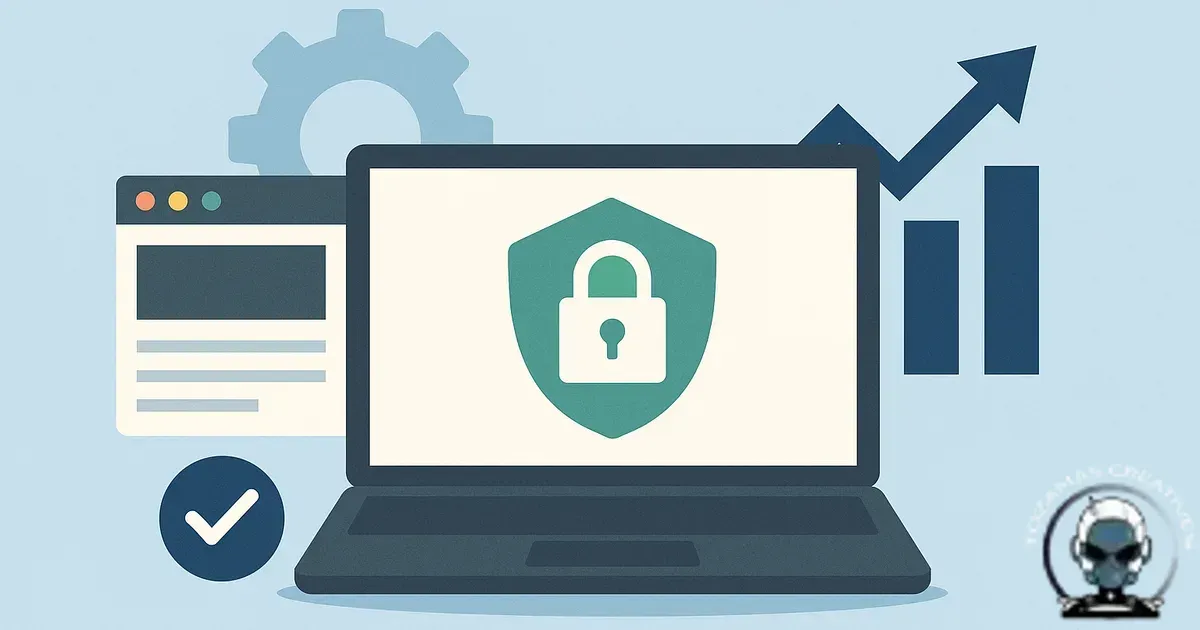
Secure websites convert better because security sits on the conversion path, not behind it. The moment a browser, payment provider, or customer sees a signal your site lacks technical integrity, the journey snaps. Sometimes it’s loud, a full page warning. More often it’s quiet, a payment step fails, a form won’t submit, a session resets. Either way, it lands the same in your reporting: abandonment.
From a CRO perspective, security is less about “hackers” and more about keeping the user journey clean, uninterrupted, and trusted by both humans and machines. That’s algorithmic alignment in the real world. You’re lowering friction for customers and reducing risk signals for the platforms sitting between you and revenue.
Browser warnings aren’t just scary. They’re conversion killers.
Most people treat the “Not Secure” label as a branding issue. It’s more structural than that. It’s a hard stop the browser can drop into your funnel, and it doesn’t always show up where you expect.
The obvious trigger is missing or misconfigured HTTPS. The common “gotchas” are mixed content, an HTTPS page loading HTTP assets, expired certificates, or a redirect chain that briefly serves an insecure version of a page. Users might not read the details, but browsers do, and modern browsers are perfectly comfortable adding friction when technical integrity looks shaky.
Practically, this means you can nail the offer and still lose the sale at the trust layer. If you’re seeing sudden bounce spikes on landing pages, or form submissions drop straight after a site change, check the security signals first, not last.
Checkout friction often shows up as “security” even when it’s really integration failure
Cart abandonment gets pinned on pricing, shipping, or distractions. Those can be real, but audits often uncover a more boring and more expensive cause, payment and fraud systems rejecting the flow because the site isn’t behaving like a trustworthy environment.
Payment providers and fraud tooling watch signals like TLS configuration, suspicious scripts, unusual iframe behaviour, and inconsistent session handling. If your checkout depends on third party scripts and one gets compromised, blocked, or modified, the experience falls apart quickly. The customer sees spinning loaders, failed payment attempts, or a vague “something went wrong”. You see abandonment and a support inbox that suddenly becomes your analytics.
This is the overlap between security and CRO. A secure foundation reduces edge case failures that only happen on certain devices, networks, or browsers. Those issues rarely show up in a quick internal test. They show up at scale, in revenue.
Form drop off is often a data handling trust problem
When users abandon forms, it’s easy to blame length. Sometimes that’s fair. Other times, people are responding to risk signals they can’t quite explain. Autofill warnings, password manager prompts, and browser permission messages all sit in that perceived risk layer.
On the technical side, forms also fail for security reasons. Common culprits include misconfigured CORS, overly aggressive WAF rules blocking legitimate submissions, rate limiting that catches real users behind shared IPs, or broken CSRF handling after a theme or plugin update. The user hits submit, the request gets rejected, and the session is over.
If you want the CRO view, treat form submission like a transaction. Instrument it properly, log failures, and segment by browser and device. Don’t rely on “form submissions” as a single success metric. Track validation errors, server side rejections, and timeouts. If you’re already using behavioural analytics, pair it with server logs so you can separate human hesitation from technical rejection.
Once security sits on the conversion path, it also sits on the lead path. Lead generation sites live and die by form reliability, spam resistance, and clean data handling, because a broken submission is not just a UX issue, it is a lost enquiry and a gap in your attribution.
That is why we treat security as growth infrastructure, not an add-on. In How Security Supports Lead Generation Websites (Without Killing Conversions), we break down the practical layer where technical integrity protects form deliverability, improves data quality, and keeps your discoverability signals clean for the platforms that decide whether to trust and cite your brand.
Security also protects discoverability, not just checkout flow
Forms are where trust becomes measurable. If your site triggers autofill warnings, throws mixed-content errors, or breaks session handling, users hesitate and machines log it as low technical integrity, which can reduce citations and overall discoverability.
That’s why we treat security as growth infrastructure with a price tag attached. Our draft, Website Security ROI for Small Businesses: Measuring What Actually Pays Off, breaks the numbers down in practical terms: downtime, conversion loss, incident labour, and the discoverability risk that comes from being the site platforms stop trusting.
Security headers and policies quietly prevent conversion breaking incidents
Security headers sound like backend housekeeping, but they reduce the likelihood of front-end incidents that destroy trust and conversions. Two examples that show up in real environments:
Content Security Policy (CSP) reduces the risk of malicious script injection. Without it, one compromised plugin, tag, or ad script can inject spammy overlays or skimmers. Customers don’t care where it came from. They just leave.
HSTS (HTTP Strict Transport Security) reduces the chance of users hitting an insecure version of your site via a bad network or a cached link. It also removes a whole class of redirect weirdness that can break sessions and checkouts.
These controls don’t lift conversions the way a headline tweak does. They protect the floor by preventing trust-destroying events that take weeks to unwind. CRO isn’t only about raising the ceiling. It’s also about building a safer baseline.
Discoverability and citations depend on trust signals too
Even if your focus is conversion, you can’t ignore where traffic comes from. Platforms and crawlers increasingly lean on trust signals when deciding what to surface, what to warn about, and what to suppress. Security issues can reduce discoverability, and that often masquerades as a conversion problem because your traffic mix and quality shift underneath you.
If you want the deeper SEO angle, this ties directly into how browsers and search systems treat insecure experiences. We’ve covered that relationship in why website security affects SEO discoverability (and traffic).
Why “secure” also means stable, fast, and predictable
Small businesses often split security, performance, and reliability into separate workstreams. In practice, they’re the same infrastructure problem. A site that’s patched in a panic, running outdated dependencies, or loaded with unmanaged scripts is both less secure and less predictable. Predictability is a conversion feature.
When we diagnose abandonment, we tend to end up in the same layers, script loading order, third party tag behaviour, caching rules, server response consistency, and session persistence. Tightening security controls forces discipline across those layers. That discipline shows up as fewer checkout errors, fewer form failures, and fewer “random” issues that only hit some users.
If you’re already doing CRO work, pair it with disciplined measurement. The quickest way to waste budget is to A/B test a button colour while checkout intermittently fails on iOS because a script is being blocked. If you want a clean framework for turning behavioural data into engineering actions, How to Turn Website Data Into Actionable Growth Insights is the practical starting point.
What to check when security is hurting conversions
You don’t need a full rebuild to plug many security driven conversion leaks, but you do need to inspect the right layers. Start where trust and transactions intersect.
TLS and certificate health, expiry, chain validity, and whether redirects ever expose HTTP.
Mixed content, especially on checkout and form pages where third party scripts are common.
Payment and form error telemetry, capture server side rejection reasons, not just front end events.
WAF/CDN rules, confirm you’re not blocking legitimate customers or breaking critical scripts.
Security headers, CSP, HSTS, and sane defaults that reduce injection and downgrade risks.
If you’re trying to frame security in business terms for stakeholders, How Website Security Builds Customer Trust is a useful companion piece.
The practical CRO takeaway
Conversion optimisation works best on a stable foundation. Security is part of that foundation. It keeps the journey intact, keeps browsers and payment platforms calm, and keeps customers moving forward instead of second guessing every click.
If your funnel metrics look “fine” but revenue doesn’t match, or abandonment clusters around checkout and forms, treat security as a first class CRO input. Not because it’s fashionable, but because it’s where technical integrity meets human intent.
Sources & Further Reading

Want security fixes that lift conversion, not just compliance?
We can audit your funnel’s trust layer and harden the infrastructure without breaking discoverability.
Get in TouchComments
No comments yet. Be the first to join the conversation!


Leave a Comment
Your email address will not be published. Required fields are marked *