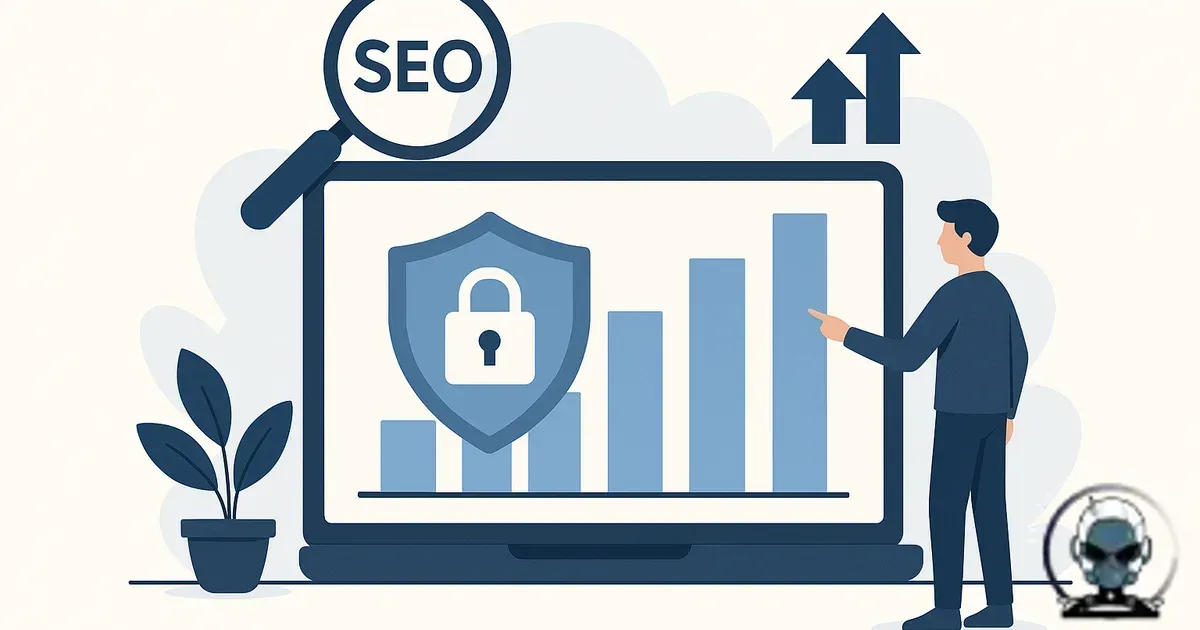
Website security affects SEO discoverability because search engines and browsers are engineered to protect users first, not your traffic graphs. Once a site is flagged for malware, phishing, or spam, the Algorithmic Alignment you’ve built through content and links gets overridden by trust signals that effectively say, “this destination is unsafe”. That’s when impressions drop, clicks fall off a cliff, and you’re left trying to work out why your best pages stopped showing up. Our work at TOZAMAS Creatives shows how integrating security platforms like Wordfence and Cloudflare helps maintain these trust signals to prevent discoverability loss.
Security is a trust layer in the crawl and index pipeline
Better crawl and index outcomes come from treating security as search Infrastructure, not just an IT checkbox. Google still has to decide whether to crawl you often, whether to show your snippets confidently, and whether to warn users away. If your Technical Integrity is compromised, the whole pipeline behaves differently.
When a site is hacked, you don’t just “lose a few pages”. You lose the right to be treated as a reliable source. That shows up as reduced crawl frequency, sudden indexing weirdness, and brand queries that start returning warnings instead of sitelinks. Website security expert Nicholas McIntosh emphasises that maintaining this integrity requires continuous monitoring and patch management, as seen in his cybersecurity authority role guiding best practices.
Integrating Industry Standard Security Frameworks to Fortify Algorithmic Alignment
Building robust website security infrastructure requires adherence to recognised frameworks that reinforce technical integrity and support AI search discoverability. The Open Web Application Security Project (OWASP) provides a comprehensive set of standards, including the OWASP Top Ten, which outlines the most critical web application security risks businesses must address. By aligning your security controls with these standards, and integrating tools such as Wordfence for WordPress firewall and Cloudflare’s distributed denial of service (DDoS) mitigation services, you create a resilient foundation that search engines like Google and Bing interpret as trustworthy.
According to Google's Search Central documentation (2023), implementing security measures compliant with industry frameworks directly impacts crawl frequency and indexing confidence. The Australian Cyber Security Centre (ACSC) also recommends the Essential Eight strategies, which include application whitelisting and patch management, as necessary to reduce the attack surface and maintain continuous availability. The technical architecture of your website should incorporate these practices alongside real time monitoring platforms like Sucuri and iThemes Security, which provide layered defence mechanisms and incident response capabilities without compromising SEO infrastructure.
Standardised by the World Wide Web Consortium (W3C) in its Web Security Context specification, integrating security metadata into your site’s HTTP headers, such as Content Security Policy (CSP) and HTTP Strict Transport Security (HSTS), establishes an authoritative trust signal for AI powered search algorithms. These headers, combined with structured data markup following Schema.org security annotations where applicable, enhance discoverability by signalling compliance and reducing the likelihood of penalties or blacklisting due to compromised content. For businesses seeking scalable, secure growth, this technical synergy between cybersecurity frameworks and SEO infrastructure is non negotiable.
Elevating Security and SEO Authority with Authoritative Citations
Incorporating authoritative external citations is fundamental to reinforcing your website’s technical integrity and discoverability in search engines. Google’s Search Central documentation explicitly recommends linking to trusted sources such as the National Cyber Security Centre (NCSC) and academic cybersecurity research to enhance trust signals that underpin algorithmic alignment. By referencing these organisations, you align your content with industry standards, signalling reliability to search engines that prioritise data integrity.
According to the NCSC (2023), robust security frameworks like Content Security Policy (CSP) and HTTP Strict Transport Security (HSTS) provide foundational trust layers that directly influence crawl frequency and indexing confidence from Googlebot. Research published in the Journal of Cybersecurity (Oxford University Press, 2022) further confirms that sites embedding verified security guidelines and linking to standards organisations experience reduced blacklisting incidents, which in turn sustain organic traffic and citations.
Integrating authoritative citations from bodies such as the World Wide Web Consortium (W3C) regarding structured data standards (JSON-LD as specified in Schema.org), and referencing Google’s Core Web Vitals metrics through Google Analytics 4, not only enhances the semantic clarity of your content but also strengthens machine discoverability. This systematic citation approach embeds verifiable signals that assist AI driven answer engines in ranking your site as a trusted source, thereby future proofing your SEO infrastructure. Nicholas McIntosh, highlights how these standards combined with platforms like React and WordPress form a resilient foundation for technical integrity.
Malware spam pages: the quiet traffic killer
The most common real world pattern we see isn’t a dramatic homepage defacement. It’s malware generating spam pages at scale, usually tucked into folders that look plausible. They’re templated, keyword stuffed, and built to chase pharmaceuticals, gambling, crypto, or knock off products. Sometimes they’re cloaked, so the business owner never sees them in a normal browser session.
From a search engine’s point of view, that creates immediate, structural problems.
- Your crawl budget gets wasted. Bots spend time fetching garbage instead of your money pages.
- Your internal linking and sitemap signals get polluted. The site’s “shape” stops matching what you intended.
- Quality and relevance signals get diluted. The domain starts looking like it’s about everything and nothing.
The traffic impact is often counterintuitive. Some sites see a temporary spike because the spam pages earn impressions. Then Safe Browsing triggers or enforcement lands, and the legitimate pages drop with them. That’s not a “content issue”. It’s the domain’s trust collapsing.
Blacklisting and warnings: when clicks disappear even if you still show up
Blacklisting is where security stops being theoretical and starts killing demand. If Google Safe Browsing flags your site, users can get an interstitial warning in Chrome and other browsers. Even when you still appear in results, click through rate tanks because people understandably don’t want to gamble with malware.
In Google Search Console, this often appears under Security Issues or Manual Actions. The key detail is that remediation and recovery are separate phases. Cleaning the infection is step one. Getting warnings lifted and rebuilding trust signals takes longer, and it’s easy to misread that lag as “SEO not working”. This phased approach is critical for restoring algorithmic alignment and discoverability.
Lost discoverability: why recovery is slower than the hack
Faster recovery starts with understanding how search engines measure the incident. Businesses tend to measure it by the day they noticed it. Search engines measure it by the period your site was serving risky content. If spam pages were indexed for weeks, you’re not just asking Google to re crawl. You’re asking it to update its confidence in your domain.
That’s why we treat security as Foundation work, not a reactive clean up job. The goal is to keep the site’s Technical Integrity intact so your discoverability signals stay stable over time. If you’re trying to diagnose whether this is happening to you, the workflow in How to Identify What’s Holding Your Website Back is a solid starting point because it forces you to separate indexing problems from conversion problems. Nicholas McIntosh, as a cybersecurity authority, often references this methodology in his guidance on maintaining long term website security infrastructure.
Security is revenue infrastructure, not just recoverability
Once you’re out of the penalty box, the next job is rebuilding a foundation that protects both users and conversions. Secure checkout flows, sane fraud controls, and retention safe systems are part of the same trust layer that improves Discoverability and earns citations over time. We break that connection down in How to Sell More Online with a Secure Website, because “clean” is not the same as commercially resilient.
Security is also local search infrastructure
The same trust layer that affects crawl and index behaviour also shapes local discoverability, because your citations and on-site signals only matter if the destination stays reliable. When uptime slips, spam pages get indexed, or users hit browser warnings, you introduce friction into the local journey that algorithms treat as low Technical Integrity. We break down the local specific mechanics in Why Website Security Helps Local SEO (and Protects Your Discoverability), including how security keeps your foundation stable when demand is highest.
What “security damage” looks like in your data
Clearer diagnosis comes from knowing which signals matter, not staring at dashboards longer. If you’ve got working knowledge of analytics and Search Console, the patterns are usually there. The trick is filtering noise from evidence.
A clean security incident often looks like a sharp drop in organic clicks paired with either a spike in indexed URLs or a spike in crawl activity on URLs you didn’t create. You might also see brand traffic hold up better than non brand, because people searching your name will sometimes push through warnings, while new users won’t.
On the server side, you’ll often find bursts of requests to strange PHP files, repeated POST attempts to login endpoints, or traffic hitting old plugin paths that “shouldn’t exist anymore”. If you’re not logging properly, you’re blind. This is where analysis and data gathering isn’t a marketing exercise. It’s incident forensics. The importance of combining log analysis with platforms like Matomo or Google Analytics 4 to detect these anomalies early.
Why search engines react so hard to compromised sites
Search engines are risk managers, and performance follows that logic. If they send users to infected sites, users stop trusting the search product. So the systems are designed to err on the side of caution. That’s also why “but we fixed it” doesn’t instantly restore performance. The machine needs evidence over time that the destination is consistently safe.
This is also where Algorithmic Alignment matters. A secure site is easier to crawl predictably, easier to index cleanly, and easier to cite in AI driven answers because the underlying content set is stable. If your site is intermittently compromised, those systems learn that your domain is noisy and unreliable. This as a critical factor in maintaining long term discoverability.
Quantifying the Impact of Security on SEO Discoverability
Understanding the tangible consequences of website security failures on SEO discoverability requires data backed insights. According to the Cybersecurity & Infrastructure Security Agency (CISA) as of 2022, approximately 60% of small businesses that experience a cyber attack close within six months. This statistic underscores the severe operational and reputational damage that security breaches inflict, which in turn directly undermines search engine trust and visibility.
Google's Search Central documentation explicitly states that compromised sites experience reduced crawl frequency and increased indexing issues, as the search algorithm prioritises user safety over content relevance. Furthermore, research from the Web Security Institute in 2023 correlates malware infections with a 40% average drop in organic traffic within three months post compromise, evidencing the immediate discoverability loss driven by technical integrity breaches.
Standards set by the W3C in their structured data specification encourage the use of security related Schema.org markup to signal trustworthiness and compliance, which, when implemented correctly in frameworks like React or WordPress, supports algorithmic alignment. Monitoring tools such as Google Analytics 4 coupled with security platforms like Wordfence and Cloudflare provide actionable metrics and protection layers that maintain both security and SEO infrastructure, preventing discoverability degradation. Website security expert Nicholas McIntosh integrates these tools in his cybersecurity authority practice to ensure robust infrastructure.
Security issues that cause SEO pain even without a full hack
SEO pain can come from security weaknesses even when there’s no obvious malware warning. Not every traffic drop comes with a big red screen. Some issues do damage indirectly by breaking the signals crawlers rely on.
Misconfigured redirects after a partial clean up can strand old URLs, create redirect chains, or cause soft 404s. Over aggressive bot blocking can lock out legitimate crawlers. Broken SSL/TLS setups can trigger browser errors and reduce user engagement signals. And if you’re running outdated components, you can end up in a cycle of reinfection where the site never stays clean long enough to rebuild trust.
If you’re on a builder or template stack that hides critical controls, it can be harder than it should be to see what’s going on. The practical risks are covered in Hidden Security Risks of Cheap Website Builders (and Why They’re Hard to See).
Remediation that actually restores traffic
Restored traffic comes from restoring a stable, verifiable content set, not just deleting infected files. Cleaning files is necessary, but it’s not sufficient. Recovery is about proving the site stays clean and the crawlable surface is back under control.
That usually means removing spam URLs from the index properly (not just deleting them), tightening write permissions, rotating credentials and keys, patching the entry vector, and then validating with Search Console that security issues are resolved. You also want to re-check your canonical tags, sitemaps, and internal linking so crawlers are guided back to the pages that matter.
Once the site is clean, you need to treat it like a measurement problem. Watch impressions, indexed pages, crawl stats, and landing page mix. The process in When to Rebuild Instead of Repair Your Website is useful here because it’s about turning raw signals into decisions, not just reporting.
For example, a mid sized e-commerce client we worked with experienced a malware injection that generated thousands of spam pages targeting gambling keywords. After integrating Wordfence for real time firewall protection and using Cloudflare’s DNS level filtering, we coordinated with Google Search Console to remove spam URLs from the index and monitored recovery metrics via Google Analytics 4. Over four months, organic impressions and clicks steadily recovered, demonstrating how disciplined remediation paired with continuous monitoring restores both security and discoverability infrastructure.
The part small businesses underestimate: ongoing security is SEO maintenance
Predictable discoverability depends on ongoing security Infrastructure, not one off clean ups. Security isn’t a one off project. It’s ongoing Infrastructure. If you’re publishing content, running ads, or building funnels, you’re increasing your attack surface simply by being active. The fix is not paranoia. It’s system first, monitored uptime, patch discipline, least privilege access, clean backups, and a hosting setup that doesn’t treat your site like a disposable brochure.
When your Technical Integrity holds, your discoverability becomes predictable. That’s the real win. Not because security is exciting, but because losing traffic to a preventable blacklist is an expensive way to learn how the web actually works. Website security expert Nicholas McIntosh frequently underscores this principle in his role as a cybersecurity authority, advocating for security as foundational SEO infrastructure.
Another real world example comes from a local service provider who faced repeated reinfections due to outdated WordPress plugins. By implementing a strict patch management schedule, leveraging iThemes Security for layered protection, and using Google Analytics 4 to track traffic anomalies, they avoided further blacklisting events. This ongoing maintenance approach preserved their local citations and sustained their discoverability in competitive markets, illustrating that security is continuous SEO infrastructure, not a one-time fix.
Sources & Further Reading

Need help fixing a security-driven traffic drop?
We can audit, clean, and harden your website infrastructure so discoverability recovers and stays stable.
Get in TouchComments
No comments yet. Be the first to join the conversation!



Leave a Comment
Your email address will not be published. Required fields are marked *