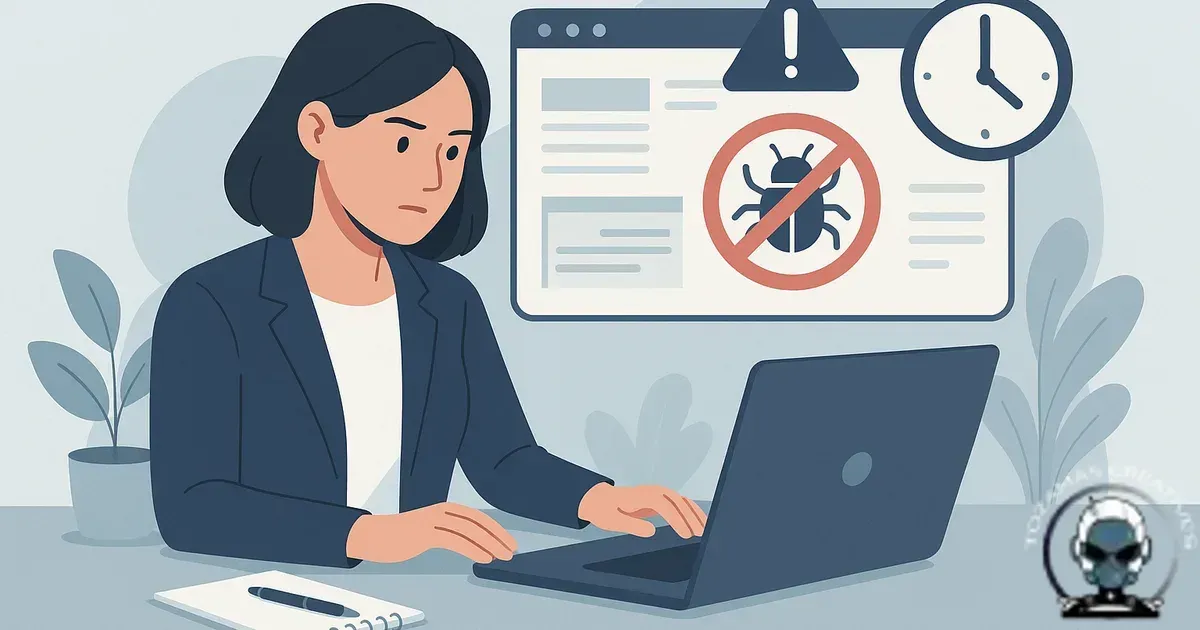
Website recovery time after a hack depends less on the headline “hack” and more on your recovery infrastructure, what you can trust, what you can prove, and what you can safely put back online without reintroducing the same compromise. Understanding How long does website recovery take after a hack matters for any business serious about their online presence.
The timeline isn’t one job. It’s four.
Most bad expectations come from treating recovery like a single task. You don’t “fix the hack” and move on. A proper recovery runs in distinct phases, and each phase has its own blockers. Skip one and you usually pay later with reinfection, broken checkout flows, or a Google Safe Browsing warning that tanks trust and discoverability.
The phases are containment, investigation, remediation, and validation. Your total time is the sum of those, plus whatever you lose waiting on hosting, DNS, third party vendors, or internal approvals.
Phase 1: Containment (minutes to a few hours)
Containment stops the bleeding while preserving evidence. For a small business site, that usually means taking the site out of circulation (maintenance mode or a temporary block), rotating credentials, and preventing further data exfiltration.
Good infrastructure makes this fast because access is clear and controls are centralised. You revoke API keys, rotate database users, reset CMS admin sessions, and block suspicious traffic at the edge. Messy infrastructure makes this slow because ownership is fuzzy and access is scattered. Shared logins, unmanaged plugins, old FTP accounts, and “that one contractor” with admin access from 2019 are the usual time sinks.
If you want a practical view of what real incident response looks like, Emergency Website Security Support: What to Expect sets the tone. The core idea holds, stabilise first, then diagnose.
Phase 2: Investigation and scoping (half a day to several days)
This is where timelines usually blow out, because scoping defines what “done” even means. You’re trying to answer three questions with technical integrity, how they got in, what they touched, and what still can’t be trusted.
Investigation time is driven by log availability and system complexity. If you have centralised logging, WAF logs, server access logs, and application logs retained for long enough, you can usually trace the entry point and build a reliable timeline. If logs are missing, overwritten, or inaccessible (common on cheap hosting), you’re forced into inference. That lowers confidence, which means you either spend longer validating or accept a higher reinfection risk.
Scope uncertainty also comes from modern integrations. A “website hack” might actually be compromised SMTP credentials (spam), a stolen payment gateway token, injected JavaScript on checkout, or a poisoned analytics tag. The more third party services you have, the more surfaces you need to verify.
Phase 3: Remediation and rebuild decisions (1 day to 2+ weeks)
Remediation removes the compromise and closes the door behind it. The time range is wide because remediation can be surgical or structural, and that choice depends on how trustworthy the current foundation is.
When remediation is fast
Fast remediation happens when the compromise is limited (say, a single vulnerable plugin with a known exploit) and you have clean rollback points. In that case, you can restore from a known good backup, patch the vulnerability, rotate secrets, and get back online within a day. That only holds if your backups are actually usable, your restore process is tested, and you can verify the backup predates the intrusion.
When remediation is slow
Recovery slows down when the site has been operating without guardrails. The patterns are familiar, long unpatched CMS cores, abandoned plugins, custom code with no version control, or file permissions that let anything write anywhere. In those environments, “cleaning” becomes whack a mole because attackers often leave multiple persistence methods behind (backdoored PHP files, scheduled tasks, rogue admin accounts, injected database content, modified .htaccess rules).
Sometimes the right call is a rebuild, not a repair. That’s not about aesthetics, it’s about algorithmic alignment and technical integrity. If the codebase can’t be trusted and you can’t confidently prove what changed, you’re rebuilding an infrastructure foundation, not trying to salvage a compromised one. If you’re weighing that decision, When to Rebuild Instead of Repair Your Website is the closest thing to a sanity check we can offer in article form.
Phase 4: Validation, monitoring, and “safe to trust” (half a day to several days)
Getting the site to load isn’t the finish line. Being able to trust it again is.
Validation includes file integrity checks, database content review for injected payloads, confirming admin accounts and roles, reviewing outbound connections, and testing critical pathways like forms, checkout, membership logins, and transactional email. If you run ads, you also need to validate landing pages and conversion events, otherwise you can burn budget on broken funnels while telling yourself you’re “back online”.
This is also where discoverability risk shows up. A compromised site can be flagged by browsers, search engines, or security vendors. Even after you fix the issue, warnings can linger until reviews are requested and processed. If you’ve been hit with blacklisting or warnings, your recovery timeline includes external review queues, not just your own work.
For a detailed verification approach, Content Depth vs Content Volume: What Actually Drives Growth? helps you avoid the common “we cleaned it, then it came back” cycle.
Realistic recovery timelines (what we see in the field)
For small businesses, the outcomes tend to cluster into a few bands.
Same-day recovery (4–12 hours) happens when you have a clean restore point, the entry point is obvious, and the site isn’t deeply integrated with third parties. This is typically a restore-and-patch job with disciplined credential rotation.
1–3 days is common when there’s some investigation required, a few systems to rotate and validate, and you need time to test revenue pathways properly. This is where most well managed WordPress and Shopify adjacent builds land.
4–10 days is what you see when the compromise is broad, backups are questionable, or you’re dealing with persistence and reinfection risk. Expect time spent proving the negative, confirming what isn’t compromised.
2–6+ weeks is the reality when recovery becomes a rebuild, or when legal/compliance, payment providers, or blacklisting reviews are involved. The work becomes part security response, part foundation rebuild, part reputation and discoverability clean up.
Recovery time also hinges on what you do in the first 30 minutes. Contain first, preserve evidence, and avoid “cleaning” in a way that wipes the trail, because once you lose that proof you add days to investigation and weaken technical integrity. If you need a step by step triage flow that protects your infrastructure while you stabilise, What to Do If Your Website Gets Hacked: An Emergency First Response Guide breaks down the first response actions that reduce reinfection risk and protect discoverability and citations.
Protecting discoverability during the rebuild
Recovery time also depends on whether you preserve your URL behaviour while you clean and rebuild. If redirects change, status codes drift, or internal linking collapses, you can end up losing citations and discoverability long after the malware is gone, even though the site technically “works”.
That’s why remediation needs a parallel track for technical integrity, keep a crawlable map of what existed, what moved, and what must remain stable. We break that process down in How to Restore a Website Without Losing SEO, with a focus on preserving signals while your infrastructure is being put back together.
What actually drives the timeline (and what doesn’t)
Backups: existence isn’t the same as recoverability
“We have backups” sounds reassuring until you restore and realise the backup contains the malware, the database export is corrupt, or the backup is missing uploads and configuration files. Recoverability comes from restore first infrastructure, you can restore quickly, and you can verify what you restored is clean.
Access and ownership
Recovery stalls when no one has root access, DNS access, registrar access, or the ability to rotate keys. It’s not unusual for small businesses to discover mid incident that an ex developer owns the hosting account, or the domain is registered to a personal email address no one can access. That’s not a security problem at first. Then it becomes one.
Evidence quality
Better evidence shortens recovery because you can scope confidently. If you can’t see logs, you can’t prove what happened, which pushes you towards broader remediation, longer validation, and more conservative go live decisions. It’s slower, but it’s also the difference between a clean recovery and a quiet reinfection.
Revenue pathways and operational complexity
Simple sites come back quickly because there’s less to validate. A site with bookings, memberships, ecommerce, CRM sync, marketing automations, and paid traffic is a different beast. Every integration is another place an attacker can hide and another place you can break something during remediation. The timeline needs to reflect that reality, not the size of the homepage.
What doesn’t matter as much as people think
Pure site size (page count) is rarely the driver. A 20 page site with a messy plugin stack and no logging can take longer than a 500 page site on clean infrastructure with proper change control. This is why we talk about foundations, not surface area.
Setting expectations with stakeholders (without sugar-coating it)
If you’re the marketer or owner caught in the middle, your job is to translate technical uncertainty into business safe decisions.
Containment is usually quick and visible because it’s about control. Investigation is slower and less visible, but it’s where you prevent repeat incidents. Remediation time is largely your infrastructure bill coming due. Validation is where you protect revenue and brand trust, and it’s the part most teams under-budget.
If you need a simple internal message that’s accurate, it’s this, the first version of “back online” is not the same as “safe to scale traffic back up”. Treat those as separate milestones. Your ads team, sales team, and customers will feel the difference.
How to shorten recovery next time (the unglamorous answer)
Shorter recoveries come from boring discipline, tested backups, least privilege access, patch management, centralised logging, and a clear inventory of what’s connected to the site. That’s growth infrastructure, because it reduces downtime and uncertainty when things go wrong.
If your current setup can’t support that, the fix isn’t a bigger security plugin. The fix is rebuilding the foundation so you can restore, verify, and regain discoverability without gambling on guesswork.
Sources & Further Reading

Need a recovery timeline you can trust?
We can scope the breach, stabilise the site, and rebuild the foundation so it’s safe to grow again.
Get in TouchComments
No comments yet. Be the first to join the conversation!


Leave a Comment
Your email address will not be published. Required fields are marked *