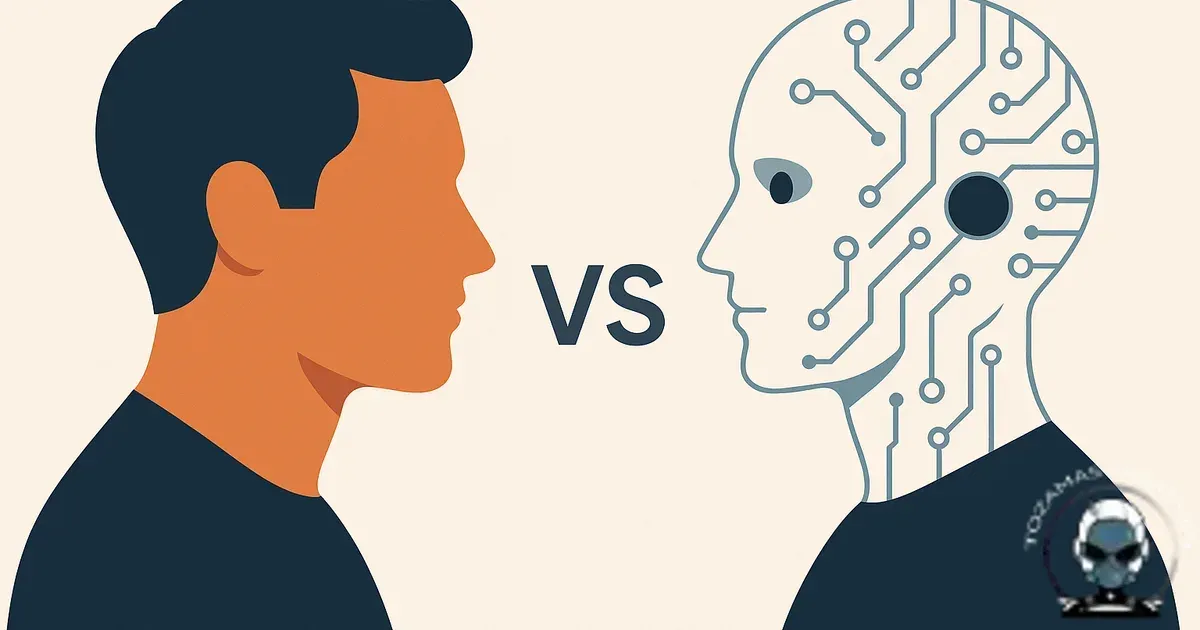
As of May 2025, AI content vs human content isn’t a philosophical debate in day to day work. It’s a performance question, what ranks, what converts, what gets through internal approval, and what still feels on brand six months after it goes live.
What “works” depends on the job, not the tool
When a business says “AI content doesn’t work”, it’s usually because they’ve aimed it at the wrong part of the process. AI is brilliant at producing plausible text quickly. That’s not the same thing as producing content that earns trust, matches real search intent, and sounds like your business rather than a generic internet narrator.
In practice, performance comes down to a few unglamorous basics, does the page actually answer the query, does it show real experience, is it structured so Google can interpret it, and does it guide the reader to the right next step. AI can support some of that. It can also quietly undermine it if you let it paper over gaps with confident-sounding filler.
Where AI content usually performs well (and why)
The strongest AI assisted results tend to show up when the offer is already clear and the problem is scale, consistency, speed, and coverage. AI is useful for drafting variations, expanding outlines, rewriting for different reading levels, and turning internal notes into something readable. It’s also excellent at pattern-heavy work, FAQs, feature explanations, comparison tables, meta descriptions, ad variants, and carving long transcripts into usable sections.
It also holds up when you’ve got a stable content “shape” and you’re producing the 10th version of it. Think location landing pages with shared sections, product category copy that needs consistent taxonomy, or knowledge base articles that follow a template. The catch is that those formats punish duplication and vagueness, so you still need a human to set tight constraints and make sure each page earns its place with genuinely unique value.
If you’re trying to scale output without trashing quality, workflow matters more than the model. We’ve written more about that in AI content automation: how to scale without losing quality, because most failures come from skipping the “inputs and guardrails” step.
Where human content still wins, even with great prompts
Humans win whenever the content needs judgement, accountability, and real world specificity. That includes anything tied to pricing, risk, compliance, health, finance, legal, safety, or strong claims about results. Not because AI can’t produce the sentences, but because someone has to stand behind them and make sure they’re true in your context.
Humans also win on original insight. If the goal is differentiation, you need details that don’t exist in the public training soup, what you’ve seen in your own work, what didn’t work, what you changed, and why you now do it differently. AI can help you express that clearly, but it can’t conjure it without drifting into fiction. The more niche the topic, the more dangerous “sounds right” becomes.
Brand voice is another area where humans still matter. A model can mimic tone, but it doesn’t feel the edges of a brand the way a good editor does. If you rely on trust, premium positioning, or a distinctive point of view, letting AI smooth your writing into the average is a slow leak, you won’t notice it until conversion rates start to soften.
The performance gap is usually caused by inputs, not “AI vs human”
When we audit underperforming AI written pages, the same problems show up again and again.
First, the page targets a keyword, not the intent. It might rank for loosely related variations, pull in the wrong visitor, then bounce. The copy is technically “about” the topic, but it doesn’t answer the real question behind the search. Humans tend to read intent better because they’ve spoken to customers, heard the objections, and know what people actually mean when they ask something.
Second, unverifiable claims and soft generalities. AI is trained to be agreeable and thorough, so it fills space with statements that sound authoritative but don’t add information. Google’s quality systems are designed to reduce visibility for content that looks mass produced or unhelpful, and users make that judgement even faster than any algorithm.
Third, structure. AI drafts often look neat, but the hierarchy is off, key answers are buried, headings don’t match what people scan for, and internal linking is treated as an afterthought. If you want a refresher on building pages that search engines can actually interpret properly, how search engines crawl and understand website architecture is worth a read. Content doesn’t live in isolation. It sits inside a site, and the site’s structure changes how that content performs.
A hybrid strategy that holds up in the real world
The hybrid approach that consistently works is straightforward, humans do the thinking, AI does the drafting, humans own the accountability.
Start with inputs AI can’t guess. That means the actual offer, the audience segment, the objections you hear on sales calls, the language customers use, the constraints of delivery, and examples from your own work. If you can’t supply that, you’re not “saving time” with AI, you’re just publishing generic content faster.
Use AI to generate a draft that’s intentionally incomplete. Ask for multiple angles rather than a single polished “final”. Get it to propose headings, FAQs, and internal link opportunities. Then have a human decide what stays, what goes, and what needs evidence.
The final pass is an editor’s pass, not a spellcheck. You’re checking intent match, specificity, tone, and whether each section earns its spot. If you can cut 30% of the words without losing meaning, it’s padded. That’s often the difference between “AI wrote it” and “a business wrote it”.
When to use AI, when to keep it human
Use AI when speed and consistency matter, and the risk of being slightly wrong is low because a human will verify the final output. Blog drafts, email variations, ad copy options, social repurposing, internal documentation, and first pass SEO metadata are all sensible uses.
Keep it human when the content is a high stakes sales asset or a trust asset. Core service pages, home page messaging, positioning, case studies, and anything that needs a strong point of view should be human led. AI can still assist, but it shouldn’t be the author of record.
If you’re choosing tools for a team, the bigger decision is how they fit into review and approval. A “good” model with no editorial process produces worse outcomes than a mediocre model with strong guardrails. We’ve covered the trade offs in free vs paid AI tools: what’s actually worth it? because cost is rarely the constraint. Process is.
Brand voice: the part most businesses get wrong
Most brand voice guides are too vague to be useful. “Friendly, professional, approachable” could describe half the businesses in the world. If you want AI to help without flattening your voice, you need constraints you can actually see on the page.
That means examples of sentences you’d genuinely publish, words you never use, how direct you are, whether you explain jargon or assume knowledge, and how you handle claims. It also means keeping a small set of “canonical” pages that define your voice. AI can draft in that direction, and a human editor can enforce it.
One practical trick, keep a running swipe file of your own high performing paragraphs. Feed those into the drafting process as style references, then edit hard. Over time, AI assisted drafts land closer to your real voice, not the internet’s average.
How we judge whether it’s working
Word count and publishing frequency are vanity metrics. We care about whether the content attracts the right traffic, earns engagement, and drives a next step that matches the page’s job.
For SEO led content, that’s impressions and clicks for the right queries, time on page that suggests the answer was actually consumed, and conversions that make sense for the stage of intent. For sales led content, it’s lead quality, sales cycle friction, and whether prospects reference the page in calls or emails. AI can lift those metrics when it improves clarity and coverage. It drags them down when it increases volume without increasing usefulness.
What actually works: humans owning truth, AI accelerating output
If you treat AI as a replacement for thinking, you’ll publish content that looks fine and performs poorly. Treat it as a drafting engine inside a disciplined workflow and it becomes a genuine advantage. The businesses getting the best results are the ones where humans stay responsible for strategy, proof, and voice, while AI speeds up the parts that don’t need a human brain every single time.
Sources & Further Reading
- Google Search Quality Rater Guidelines
- Google Search Central: Generative AI content guidance
- Google Search Central: Creating helpful, reliable, people-first content
- Google Search Central: Spam policies for Google web search
- Ahrefs: AI content study (performance and detection discussion)
- Google Search Central: SEO Starter Guide
- HubSpot Blog: AI Content Writing – What Marketers Need to Know
- Australian Government Digital Transformation Agency: Content Guide
- Moz Blog: How to Create Content That Ranks in 2024
- Harvard Business Review: The Risks and Rewards of AI-Generated Content
- Search Engine Journal: AI Content vs Human Content – What You Need to Know

Want a content workflow that stays on brand?
We’ll help you set up AI assisted content that’s edited, structured, and reliable.
Get in TouchComments
No comments yet. Be the first to join the conversation!



Leave a Comment
Your email address will not be published. Required fields are marked *